
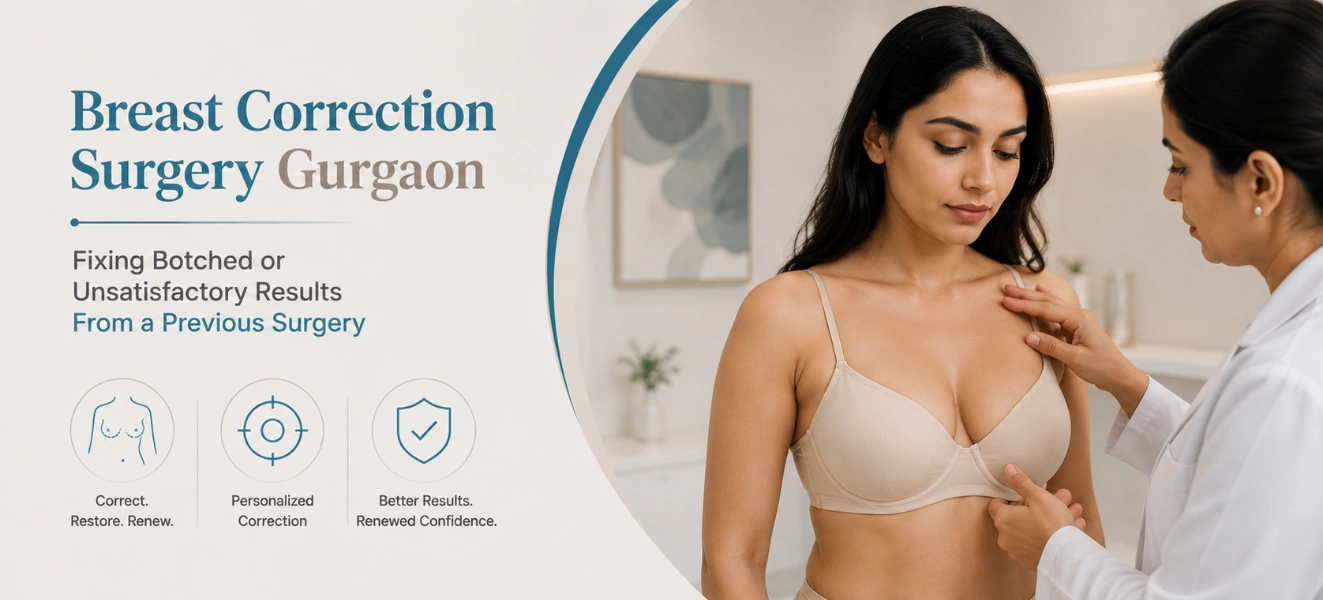
The request for breast correction surgery in Gurgaon after a previous procedure that did not deliver the expected result is one of the most emotionally complex consultations in plastic surgery practice. The patient arrives not only with a clinical problem but with a loss of trust in the surgical process itself, anxiety about whether correction is possible, and often a significant period of time spent living with a result that disappoints or distresses them every day. Handling this consultation well requires both honest clinical assessment and the psychological sensitivity that this particular patient experience demands.
This guide addresses the practical questions that matter most to patients seeking breast correction surgery in Gurgaon: what kinds of unsatisfactory results can be corrected, what cannot be changed, how long the patient should wait before pursuing correction, how to evaluate a surgeon for complex revision work, and what the correction process involves. It draws the important distinction between a result that is within the expected variation of surgery and one that reflects a genuine technical or aesthetic failure requiring correction.
To have your previous breast surgery result assessed by Dr. Pradeep Kumar Singh, call +91 82879 23924 or arrange a consultation at Artemis Hospital, Gurugram.
Can a Poorly Done Breast Surgery Be Corrected?
In most cases, yes. The correctable categories of unsatisfactory breast surgery results include:
- Significant size asymmetry: Where the two breasts have healed to different final volumes due to unequal pocket creation, different implant positions relative to the chest wall, or different degrees of swelling resolution, correction involves repositioning or exchanging one or both implants to achieve balanced volume and projection.
- Poor scar quality or malpositioning: Scars placed at the wrong anatomical level, or scars that have hypertrophied or widened beyond expected limits due to wound tension or inadequate closure technique, can be revised. Scar revision is performed once the scar has fully matured, typically twelve to eighteen months after the original procedure.
- Wrong implant size or profile: Where the final result is significantly larger or smaller than the patient discussed with the surgeon, or where the profile creates a shape that was not agreed pre-operatively, implant exchange corrects this. Size revision after augmentation is one of the most common revision procedures globally.
- Capsular contracture: Tightening of the scar capsule around the implant producing hardness, distortion, and discomfort is addressed through capsulectomy and implant exchange, as described in the previous blog in this series.
- Implant malposition: Implants that have migrated below the inframammary fold, laterally, medially, or superiorly from their intended position are corrected through pocket reconstruction.
- Visible implant rippling or edge visibility: Where the implant is visible or palpable at the skin surface, particularly in the upper pole, changing the placement from subglandular to submuscular or dual plane, or exchanging to a higher-cohesivity implant, addresses the problem.
What breast correction surgery in Gurgaon cannot change is the patient’s natural tissue characteristics: thin skin that shows implants remains thin after correction, limited breast tissue that provided insufficient coverage before continues to limit what coverage is possible, and skin that scars prominently due to individual wound healing biology will continue to do so. These realities are discussed honestly at the assessment consultation, because setting accurate expectations for what correction can achieve is the single most important determinant of long-term patient satisfaction after revision surgery.
What Questions Should You Ask Before Corrective Breast Surgery?
Choosing a surgeon for breast correction surgery in Gurgaon requires more diligence than choosing a surgeon for primary breast surgery, because revision surgery is technically more demanding than primary surgery. The scar tissue and altered anatomy from the first procedure create a more complex surgical environment, and the surgeon must have specific experience managing these challenges. The questions to ask at a revision consultation include:
- How many breast revision procedures do you perform annually? Revision surgery is a subspecialty within plastic surgery. A surgeon who performs a significant proportion of revision cases, rather than only primary augmentations, has the hands-on experience with the specific technical challenges of secondary breast surgery that primary-case experience alone does not provide.
- What is your specific plan for addressing my complication? A competent revision surgeon can explain the specific steps they will take to address the identified problem, including how they will manage the scar tissue from the first procedure, what implant they propose and why, and what the risk of recurrence of the specific complication is with the proposed approach.
- What imaging do you require before revision surgery? Ultrasound or MRI to assess the current state of the implants and capsule is standard pre-operative assessment for revision breast surgery in Gurgaon. A surgeon who proposes revision without prior imaging is not planning the procedure with adequate information.
- What is your complication rate for the specific revision I need? Published data on revision surgery outcomes are available and can be quoted. Revision surgery complication rates are higher than primary augmentation because of the compromised tissue environment, and a surgeon who presents revision as straightforward is either inexperienced or not being candid.
- What happens if the revision does not achieve the desired result? Understanding the plan if the first revision is not fully successful before you undergo it is an important part of informed decision-making for breast correction surgery.
How Soon After a Bad Result Can Corrective Surgery Be Done?
The answer depends on what the problem is. There are two distinct scenarios in breast correction surgery in Gurgaon:
Early complications requiring prompt intervention
Haematoma (blood collection), wound dehiscence (wound opening), or implant exposure through the wound are early postoperative complications that require urgent surgical management within days to weeks of the original procedure, regardless of the timeline that might otherwise apply. These are not aesthetic dissatisfactions but acute complications, and they are managed on a clinical urgency basis.
Aesthetic or functional dissatisfaction
For dissatisfaction with the aesthetic result, including wrong size, poor shape, asymmetry, visible rippling, or scar dissatisfaction, the universally accepted minimum waiting period before correction is twelve months from the original procedure. This waiting period is not arbitrary: breast augmentation results continue to evolve for twelve months as swelling resolves, implants settle, and scars mature. A result that appears significantly asymmetric at three months frequently improves considerably at twelve months. Correction planned before the twelve-month mark risks addressing a problem that would have partially resolved on its own, and revision performed on tissues that have not fully healed from the initial procedure is technically more difficult and carries higher complication rates than revision on fully mature tissues.
At Artemis Hospital, patients from Faridabad Sector 15 and Sector 21 who consult for breast correction surgery in Gurgaon are advised to complete the twelve-month wait before any revision is planned for aesthetic concerns, while receiving clinical support, honest counselling, and imaging review during the waiting period. Patients with functional concerns (pain, significant implant movement, wound complications) are assessed urgently regardless of the timeline.
Is Breast Correction Surgery Riskier Than the Original Procedure?
Yes, generally. Breast correction surgery in Gurgaon is technically more complex than primary breast surgery for three specific reasons: the anatomy has been altered by the original procedure and by the healing process that followed; scar tissue in and around the original pocket creates a more restricted and less predictable surgical environment; and the patient’s tissue tolerance for further surgical trauma is reduced, making adequate blood supply to the healing tissues more important to maintain carefully. Published series on revision breast surgery consistently report higher complication rates than for primary augmentation, with capsular contracture recurrence rates and wound healing issues occurring more frequently in revision cases. These elevated risks must be disclosed at the consultation for breast correction surgery and are a key component of the informed consent process at Artemis Hospital.
How Much Does Breast Correction Surgery Cost in Gurgaon?
Breast correction surgery cost in Gurgaon at Artemis Hospital depends on the nature of the correction required. A straightforward implant exchange has a lower cost profile than a total capsulectomy with pocket reconstruction, and the use of acellular dermal matrix (ADM) for structural pocket support adds further to the cost where it is indicated. The pre-operative imaging (ultrasound or MRI) is an additional cost that precedes the surgical estimate. A personalised cost estimate for breast correction surgery in Gurgaon is provided at the assessment consultation after imaging review and clinical examination determine the appropriate revision approach. Contact Artemis Hospital to arrange a revision assessment.
Frequently Asked Questions
Can a poorly done breast surgery be corrected in Gurgaon?
Yes, in most cases. Correctable problems include significant size asymmetry, poor scar placement, wrong implant size or profile, capsular contracture, implant malposition, and visible rippling. What cannot be changed is the patient’s underlying tissue characteristics. The assessment consultation at Artemis Hospital identifies specifically what is correctable in each case and sets accurate expectations for what the correction can and cannot achieve.
How soon after a bad result can breast correction surgery be done?
For acute complications (haematoma, wound dehiscence, implant exposure), prompt surgical management is required regardless of timeline. For aesthetic dissatisfaction with size, shape, scars, or symmetry, the minimum waiting period before correction is twelve months from the original surgery. This allows the initial result to fully mature, swelling to resolve, and tissues to heal completely before revision surgery is planned.
What questions should I ask before breast corrective surgery?
Ask the revision surgeon: how many breast revision procedures they perform annually; what their specific plan is for addressing your complication; what imaging they require before proceeding; what their complication rate is for the specific revision you need; and what happens if the revision does not fully achieve the desired result. A revision surgeon who cannot answer these questions clearly and specifically is not the right choice for breast correction surgery in Gurgaon.
Is breast correction surgery riskier than the original procedure?
Yes. Revision breast surgery is technically more demanding than primary augmentation because altered anatomy, scar tissue from the first procedure, and reduced tissue healing reserve all increase the complexity and the complication risk. Published revision breast surgery series consistently show higher complication rates than primary augmentation. These risks are fully disclosed at the Artemis Hospital consultation before any revision procedure is agreed.
How much does breast correction surgery cost in Gurgaon?
Breast correction surgery cost in Gurgaon depends on the nature of the revision required. A personalised estimate is provided at the assessment consultation after imaging review and clinical examination. Call +91 82879 23924.
What are realistic expectations for breast correction surgery results in Gurgaon?
Most problems that motivate breast correction surgery in Gurgaon can be significantly improved: size asymmetry, implant malposition, capsular contracture, and visible rippling each have well-established surgical solutions. Scar revision improves scar quality but does not eliminate scars entirely. Thin tissue that caused implant edge visibility in the first procedure remains thin after revision, which limits the improvement achievable without changing placement from subglandular to submuscular. At Artemis Hospital, every revision consultation sets expectations for what the correction can and cannot change before any plan is agreed.
Breast correction surgery in Gurgaon at Artemis Hospital begins with an honest assessment of what is correctable and what realistic expectations are. Call +91 82879 23924 or visit Artemis Hospital, Sector 51, Gurugram, Haryana 122001.
Reviews: Dr. Pradeep Kumar Singh on Google.
Dr. Pradeep Kumar Singh: MCh Plastic Surgery, Fellowship Paris, APSI Member: Head of Plastic Surgery, Artemis Hospital, Sector 51, Gurugram.