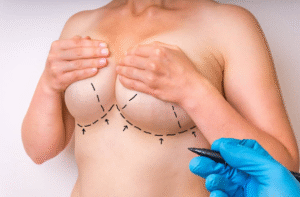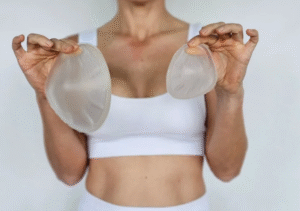
Not every breast augmentation in Gurgaon results remain satisfactory over time. Some complications develop months or years after the initial surgery; others are present from the outset and become more apparent as swelling resolves. The two most common indications for breast augmentation revision surgery in Gurgaon are capsular contracture, where the scar tissue around the implant tightens progressively and changes the breast shape and feel, and implant malposition, where the implant shifts out of its intended position within the pocket. Both are correctable, both require revision surgery to address properly, and both are managed at Artemis Hospital with a specific diagnostic and surgical approach that addresses the underlying cause rather than only the visible result.
If you have had breast augmentation in Gurgaon and are experiencing a change in breast shape, firmness, position, or comfort, this guide explains what is most likely causing the change, what the revision options are, what the surgical process involves, and what realistic outcomes from revision surgery look like. It also addresses the question patients ask most frequently and most candidly: why did this happen, and could it have been prevented?
Call +91 82879 23924 to arrange a revision assessment with Dr. Pradeep Kumar Singh at Artemis Hospital, Gurugram.
What Is Capsular Contracture, and Why Does It Happen?
Capsular contracture is the pathological tightening of the fibrous scar capsule that forms naturally around any breast implant. Every breast implant, regardless of type or surface texture, develops a surrounding capsule of fibrous scar tissue as part of the body’s normal foreign body response. In most patients, this capsule remains soft and pliable, and the breast feels natural and moves freely. In capsular contracture, the capsule becomes abnormally thickened, stiff, and increasingly contracted, squeezing the implant into a harder, rounder, and progressively more uncomfortable shape.
The capsular contracture rate in published FDA post-approval studies for breast augmentation in Gurgaon and globally is approximately 10 to 15 per cent at ten years in primary augmentation patients. The exact cause in any individual patient is not always identifiable, but the factors most consistently associated with increased contracture risk in published literature are subclinical bacterial biofilm on the implant surface at the time of placement, haematoma or seroma in the early postoperative period, subglandular placement (directly behind the gland rather than beneath the muscle), and radiation to the breast after implant placement.
Baker Grading: How Severe Is the Contracture?
Capsular contracture severity is classified by the Baker grading system:
| Baker Grade | Clinical Description | Typical Patient Experience |
| Grade I | Breast is soft; implant is not palpable; result is natural-looking | No symptoms; contracture is subclinical |
| Grade II | Breast is slightly firm; implant is palpable but not visible | Mild firmness; patient may notice it when examined |
| Grade III | Breast is firm, and implant is visible; shape may be distorted | Visible change in breast shape; noticeable hardness |
| Grade IV | Breast is hard; implant is distorted; pain or discomfort is present | Significant shape distortion; may be uncomfortable |
Grades I and II do not require surgical revision. Grade III and Grade IV capsular contracture at breast augmentation revision surgery in Gurgaon at Artemis Hospital is managed surgically, with the approach determined by the grade, the duration of the contracture, and whether the implant will be replaced or removed.
How Is Capsular Contracture Treated After Breast Augmentation in Gurgaon?
Surgical management of capsular contracture involves one or more of the following, depending on the grade and the clinical assessment:
Total Capsulectomy in Breast Augmentation Revision Surgery
Total capsulectomy removes the entire scar capsule surrounding the implant, along with the implant itself. This is the most complete surgical treatment of capsular contracture and is the approach used for Grade IV contracture with significant distortion and discomfort at Artemis Hospital. The pocket is then either closed and left implant-free, or reconstructed with a new, correctly placed implant in a fresh tissue pocket. Total capsulectomy requires careful surgical technique to avoid disrupting the muscle or rib cage beneath the capsule in submuscular placements.
Capsulotomy
Capsulotomy releases the contracted capsule by making incisions within it without removing the capsule tissue. It is less complete than capsulectomy and is associated with a higher recurrence rate of contracture, but it is appropriate for Grade III cases where the contracture is of moderate severity, and the implant is otherwise satisfactory and appropriately positioned.
Implant Exchange
Where the implant itself is a contributing factor, either because it has ruptured silently, because it is from an older generation with a higher surface irregularity, or because a different implant size or profile would produce a better result, the implant is exchanged as part of the revision procedure. At Artemis Hospital, all revision breast augmentation in Gurgaon procedures that involve capsulectomy also include implant exchange, because replacing the implant into the same capsule environment without removing the pathological tissue produces a high recurrence rate.
What Causes Implant Malposition, and How Is It Corrected?
Implant malposition refers to the displacement of the implant from its intended position within the breast pocket. The four main types of malposition in breast augmentation in Gurgaon are:
- Inferior displacement (bottoming out): The implant descends below the inframammary fold, producing a breast where the nipple appears high relative to the lower pole, and where the lower breast skin becomes excessively full and ptotic. This is the most common malposition pattern and is caused by excessive inferior pocket dissection or by the weight of the implant exceeding the support capacity of the inferior breast tissue over time.
- Lateral displacement: The implant migrates toward the lateral chest wall, producing excessive lateral fullness and a widened gap between the breasts (symmastia in reverse). This is caused by excessive lateral pocket dissection or by a pocket that is too wide relative to the implant base width.
- Medial displacement (symmastia): The implants migrate toward the midline and beneath the sternum, causing the pockets to communicate and the implants to touch or appear to fuse centrally. Symmastia is one of the most challenging malpositions to correct and requires a complex pocket reconstruction with internal suturing of the medial pocket wall.
- Superior displacement: The implant remains high above the natural breast crease, producing a result where the lower pole is flat, and the implant bulk is concentrated in the upper breast. This can result from a tight capsule in the inferior pole or from an implant placed in a pocket that was not adequately released inferiorly.
Implant malposition correction in breast augmentation revision surgery in Gurgaon at Artemis Hospital involves pocket reconstruction: reshaping the internal pocket dimensions to reposition the implant correctly. Depending on the malposition type, this may require internal capsular scoring, suture closure of the overly-expanded pocket walls, or the use of an internal bra (ADM, acellular dermal matrix) to provide structural support for the corrected pocket where the native tissue lacks sufficient strength to maintain the new position.
How Long Do Revision Breast Implants Last in Gurgaon?
Revision breast augmentation implants last as long as primary augmentation implants, which is to say indefinitely for those that remain intact and asymptomatic. The FDA post-approval data showing approximately 8 per cent rupture at ten years for current-generation cohesive silicone implants applies equally to revision cases. The monitoring programme at Artemis Hospital for revision breast augmentation in Gurgaon is the same as for primary augmentation: ultrasound or MRI from five to six years after placement, and imaging prompted by any change in breast shape or feel before that interval.
The rate of further revision after well-executed breast augmentation in Gurgaon revision surgery is significantly lower than the initial revision rate, because the underlying causes of the first complication are specifically addressed and corrected in the revision approach. The risk of recurrent capsular contracture after total capsulectomy and implant exchange is approximately 8 to 12 per cent at five years in published series, compared with the initial incidence rate.
How Much Does Breast Augmentation Revision Surgery Cost in Gurgaon?
Breast augmentation revision surgery cost in Gurgaon at Artemis Hospital depends on the complexity of the revision: a straightforward implant exchange has a different cost profile from a total capsulectomy with pocket reconstruction and implant exchange, and the use of acellular dermal matrix for internal pocket support adds to the procedure cost. A personalised cost estimate for breast augmentation revision in Gurgaon is provided at the consultation after the clinical assessment and ultrasound or MRI imaging determines the appropriate revision approach. Contact Artemis Hospital to arrange a revision assessment.
Frequently Asked Questions
What causes the need for breast augmentation revision surgery?
The two most common causes of revision in breast augmentation are capsular contracture (Grade III or IV tightening of the implant scar capsule, producing hardness, distortion, and discomfort) and implant malposition (displacement of the implant from its intended pocket position). Other revision indications include silent implant rupture confirmed on imaging, size or profile change as a patient preference, and asymmetry from unequal healing. Capsular contracture affects approximately 10 to 15 per cent of primary augmentation patients at ten years based on FDA data.
What is capsular contracture and how is it treated in Gurgaon?
Capsular contracture is the abnormal tightening of the fibrous scar capsule around a breast implant. Graded from I (soft, natural feel) to IV (hard, painful, significantly distorted), Grades III and IV require surgical revision. Treatment at Artemis Hospital involves total capsulectomy (complete removal of the contracted capsule) with implant exchange in Grade IV cases, and capsulotomy with implant exchange for Grade III. Replacing the implant into the same contracted environment without removing the capsule produces high recurrence rates.
How long do revision breast implants last in Gurgaon?
Revision breast implants last as long as primary augmentation implants. Current-generation cohesive silicone implants have an approximately 8 per cent rupture rate at ten years based on FDA post-approval data. The monitoring programme at Artemis Hospital for revision cases is the same as for primary augmentation: ultrasound or MRI from five to six years after placement.
Is revision breast augmentation surgery more painful than the first augmentation?
Revision breast augmentation surgery in Gurgaon typically involves a similar post-operative experience to primary augmentation. Where total capsulectomy is required, the dissection is more extensive than in a primary procedure and may produce slightly more post-operative discomfort in the first week. Where the revision involves only implant exchange or limited capsulotomy, the post-operative recovery is comparable to or shorter than the initial procedure.
How much does breast augmentation revision surgery cost in Gurgaon?
Breast augmentation revision cost in Gurgaon at Artemis Hospital depends on the complexity of the revision procedure. A straightforward implant exchange has a lower cost than a total capsulectomy with pocket reconstruction and implant exchange. A personalised estimate is provided at the clinical assessment and imaging review. Call +91 82879 23924.
If your breast augmentation result has changed, the cause is identifiable, and the correction is planned. Call +91 82879 23924 or visit Artemis Hospital, Sector 51, Gurugram, Haryana 122001.
Reviews: Dr. Pradeep Kumar Singh on Google.
Dr. Pradeep Kumar Singh: MCh Plastic Surgery, Fellowship Paris, APSI Member: Head of Plastic Surgery, Artemis Hospital, Sector 51, Gurugram.
Not every breast augmentation in Gurgaon results remain satisfactory over time. Some complications develop months or years after the initial surgery; others are present from the outset and become more apparent as swelling resolves. The two most common indications for breast augmentation revision surgery in Gurgaon are capsular contracture, where the scar tissue around the implant tightens progressively and changes the breast shape and feel, and implant malposition, where the implant shifts out of its intended position within the pocket. Both are correctable, both require revision surgery to address properly, and both are managed at Artemis Hospital with a specific diagnostic and surgical approach that addresses the underlying cause rather than only the visible result.
If you have had breast augmentation in Gurgaon and are experiencing a change in breast shape, firmness, position, or comfort, this guide explains what is most likely causing the change, what the revision options are, what the surgical process involves, and what realistic outcomes from revision surgery look like. It also addresses the question patients ask most frequently and most candidly: why did this happen, and could it have been prevented?
Call +91 82879 23924 to arrange a revision assessment with Dr. Pradeep Kumar Singh at Artemis Hospital, Gurugram.
What Is Capsular Contracture, and Why Does It Happen?
Capsular contracture is the pathological tightening of the fibrous scar capsule that forms naturally around any breast implant. Every breast implant, regardless of type or surface texture, develops a surrounding capsule of fibrous scar tissue as part of the body’s normal foreign body response. In most patients, this capsule remains soft and pliable, and the breast feels natural and moves freely. In capsular contracture, the capsule becomes abnormally thickened, stiff, and increasingly contracted, squeezing the implant into a harder, rounder, and progressively more uncomfortable shape.
The capsular contracture rate in published FDA post-approval studies for breast augmentation in Gurgaon and globally is approximately 10 to 15 per cent at ten years in primary augmentation patients. The exact cause in any individual patient is not always identifiable, but the factors most consistently associated with increased contracture risk in published literature are subclinical bacterial biofilm on the implant surface at the time of placement, haematoma or seroma in the early postoperative period, subglandular placement (directly behind the gland rather than beneath the muscle), and radiation to the breast after implant placement.
Baker Grading: How Severe Is the Contracture?
Capsular contracture severity is classified by the Baker grading system:
| Baker Grade | Clinical Description | Typical Patient Experience |
| Grade I | Breast is soft; implant is not palpable; result is natural-looking | No symptoms; contracture is subclinical |
| Grade II | Breast is slightly firm; implant is palpable but not visible | Mild firmness; patient may notice it when examined |
| Grade III | Breast is firm, and implant is visible; shape may be distorted | Visible change in breast shape; noticeable hardness |
| Grade IV | Breast is hard; implant is distorted; pain or discomfort is present | Significant shape distortion; may be uncomfortable |
Grades I and II do not require surgical revision. Grade III and Grade IV capsular contracture at breast augmentation revision surgery in Gurgaon at Artemis Hospital is managed surgically, with the approach determined by the grade, the duration of the contracture, and whether the implant will be replaced or removed.
How Is Capsular Contracture Treated After Breast Augmentation in Gurgaon?
Surgical management of capsular contracture involves one or more of the following, depending on the grade and the clinical assessment:
Total Capsulectomy in Breast Augmentation Revision Surgery
Total capsulectomy removes the entire scar capsule surrounding the implant, along with the implant itself. This is the most complete surgical treatment of capsular contracture and is the approach used for Grade IV contracture with significant distortion and discomfort at Artemis Hospital. The pocket is then either closed and left implant-free, or reconstructed with a new, correctly placed implant in a fresh tissue pocket. Total capsulectomy requires careful surgical technique to avoid disrupting the muscle or rib cage beneath the capsule in submuscular placements.
Capsulotomy
Capsulotomy releases the contracted capsule by making incisions within it without removing the capsule tissue. It is less complete than capsulectomy and is associated with a higher recurrence rate of contracture, but it is appropriate for Grade III cases where the contracture is of moderate severity, and the implant is otherwise satisfactory and appropriately positioned.
Implant Exchange
Where the implant itself is a contributing factor, either because it has ruptured silently, because it is from an older generation with a higher surface irregularity, or because a different implant size or profile would produce a better result, the implant is exchanged as part of the revision procedure. At Artemis Hospital, all revision breast augmentation in Gurgaon procedures that involve capsulectomy also include implant exchange, because replacing the implant into the same capsule environment without removing the pathological tissue produces a high recurrence rate.
What Causes Implant Malposition, and How Is It Corrected?
Implant malposition refers to the displacement of the implant from its intended position within the breast pocket. The four main types of malposition in breast augmentation in Gurgaon are:
- Inferior displacement (bottoming out): The implant descends below the inframammary fold, producing a breast where the nipple appears high relative to the lower pole, and where the lower breast skin becomes excessively full and ptotic. This is the most common malposition pattern and is caused by excessive inferior pocket dissection or by the weight of the implant exceeding the support capacity of the inferior breast tissue over time.
- Lateral displacement: The implant migrates toward the lateral chest wall, producing excessive lateral fullness and a widened gap between the breasts (symmastia in reverse). This is caused by excessive lateral pocket dissection or by a pocket that is too wide relative to the implant base width.
- Medial displacement (symmastia): The implants migrate toward the midline and beneath the sternum, causing the pockets to communicate and the implants to touch or appear to fuse centrally. Symmastia is one of the most challenging malpositions to correct and requires a complex pocket reconstruction with internal suturing of the medial pocket wall.
- Superior displacement: The implant remains high above the natural breast crease, producing a result where the lower pole is flat, and the implant bulk is concentrated in the upper breast. This can result from a tight capsule in the inferior pole or from an implant placed in a pocket that was not adequately released inferiorly.
Implant malposition correction in breast augmentation revision surgery in Gurgaon at Artemis Hospital involves pocket reconstruction: reshaping the internal pocket dimensions to reposition the implant correctly. Depending on the malposition type, this may require internal capsular scoring, suture closure of the overly-expanded pocket walls, or the use of an internal bra (ADM, acellular dermal matrix) to provide structural support for the corrected pocket where the native tissue lacks sufficient strength to maintain the new position.
How Long Do Revision Breast Implants Last in Gurgaon?
Revision breast augmentation implants last as long as primary augmentation implants, which is to say indefinitely for those that remain intact and asymptomatic. The FDA post-approval data showing approximately 8 per cent rupture at ten years for current-generation cohesive silicone implants applies equally to revision cases. The monitoring programme at Artemis Hospital for revision breast augmentation in Gurgaon is the same as for primary augmentation: ultrasound or MRI from five to six years after placement, and imaging prompted by any change in breast shape or feel before that interval.
The rate of further revision after well-executed breast augmentation in Gurgaon revision surgery is significantly lower than the initial revision rate, because the underlying causes of the first complication are specifically addressed and corrected in the revision approach. The risk of recurrent capsular contracture after total capsulectomy and implant exchange is approximately 8 to 12 per cent at five years in published series, compared with the initial incidence rate.
How Much Does Breast Augmentation Revision Surgery Cost in Gurgaon?
Breast augmentation revision surgery cost in Gurgaon at Artemis Hospital depends on the complexity of the revision: a straightforward implant exchange has a different cost profile from a total capsulectomy with pocket reconstruction and implant exchange, and the use of acellular dermal matrix for internal pocket support adds to the procedure cost. A personalised cost estimate for breast augmentation revision in Gurgaon is provided at the consultation after the clinical assessment and ultrasound or MRI imaging determines the appropriate revision approach. Contact Artemis Hospital to arrange a revision assessment.
Frequently Asked Questions
What causes the need for breast augmentation revision surgery?
The two most common causes of revision in breast augmentation are capsular contracture (Grade III or IV tightening of the implant scar capsule, producing hardness, distortion, and discomfort) and implant malposition (displacement of the implant from its intended pocket position). Other revision indications include silent implant rupture confirmed on imaging, size or profile change as a patient preference, and asymmetry from unequal healing. Capsular contracture affects approximately 10 to 15 per cent of primary augmentation patients at ten years based on FDA data.
What is capsular contracture and how is it treated in Gurgaon?
Capsular contracture is the abnormal tightening of the fibrous scar capsule around a breast implant. Graded from I (soft, natural feel) to IV (hard, painful, significantly distorted), Grades III and IV require surgical revision. Treatment at Artemis Hospital involves total capsulectomy (complete removal of the contracted capsule) with implant exchange in Grade IV cases, and capsulotomy with implant exchange for Grade III. Replacing the implant into the same contracted environment without removing the capsule produces high recurrence rates.
How long do revision breast implants last in Gurgaon?
Revision breast implants last as long as primary augmentation implants. Current-generation cohesive silicone implants have an approximately 8 per cent rupture rate at ten years based on FDA post-approval data. The monitoring programme at Artemis Hospital for revision cases is the same as for primary augmentation: ultrasound or MRI from five to six years after placement.
Is revision breast augmentation surgery more painful than the first augmentation?
Revision breast augmentation surgery in Gurgaon typically involves a similar post-operative experience to primary augmentation. Where total capsulectomy is required, the dissection is more extensive than in a primary procedure and may produce slightly more post-operative discomfort in the first week. Where the revision involves only implant exchange or limited capsulotomy, the post-operative recovery is comparable to or shorter than the initial procedure.
How much does breast augmentation revision surgery cost in Gurgaon?
Breast augmentation revision cost in Gurgaon at Artemis Hospital depends on the complexity of the revision procedure. A straightforward implant exchange has a lower cost than a total capsulectomy with pocket reconstruction and implant exchange. A personalised estimate is provided at the clinical assessment and imaging review. Call +91 82879 23924.
If your breast augmentation result has changed, the cause is identifiable, and the correction is planned. Call +91 82879 23924 or visit Artemis Hospital, Sector 51, Gurugram, Haryana 122001.
Reviews: Dr. Pradeep Kumar Singh on Google.
Dr. Pradeep Kumar Singh: MCh Plastic Surgery, Fellowship Paris, APSI Member: Head of Plastic Surgery, Artemis Hospital, Sector 51, Gurugram.