
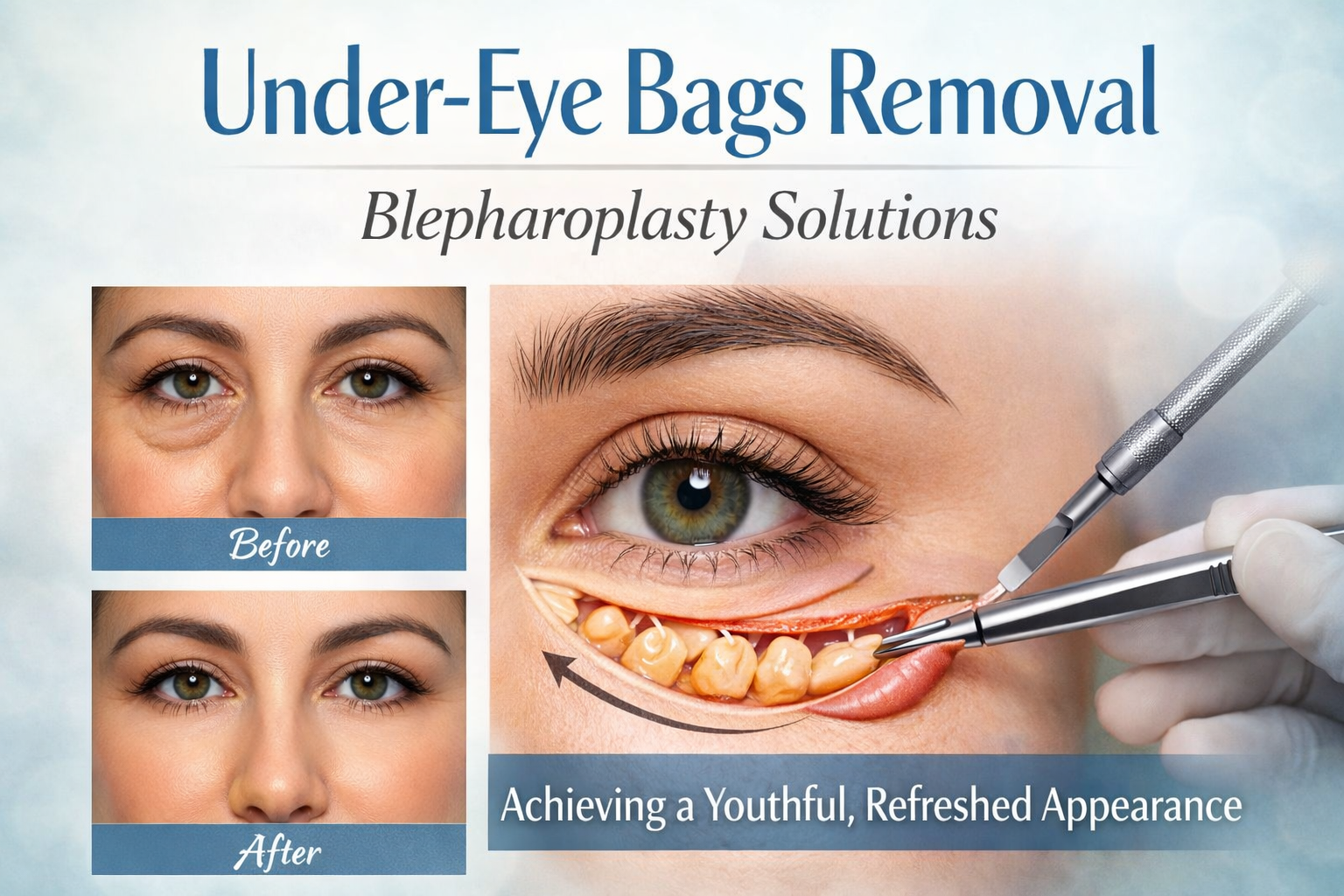
Under-eye bags create a tired, aged appearance regardless of how rested you actually feel. No amount of sleep, expensive creams, or home remedies can correct the structural changes causing this problem. Across Gurgaon and South Delhi, from DLF Phase 5 to Vasant Vihar, women and men seek permanent solutions to restore a refreshed, youthful look to their eyes.
Dr. Pradeep Kumar Singh, Head of Plastic Surgery at Artemis Hospital, Sector 51, Gurgaon, specialises in lower blepharoplasty (eyelid surgery) that addresses under-eye bags with natural-looking results. With his Fellowship in Advanced Aesthetic Surgery from St Louis Hospital, Paris, and over 17 years of surgical expertise, he understands the delicate anatomy around the eyes and delivers rejuvenation without that operated-on appearance.
This guide explains what causes under-eye bags and how blepharoplasty provides lasting correction.
What Causes Under-Eye Bags?
Understanding the cause helps clarify why topical treatments fail and surgery succeeds. Under-eye bags develop through several mechanisms:
- Fat Prolapse: The orbital septum (membrane holding fat around the eyes) weakens with age, allowing fat pads to bulge forward. This creates the puffy, baggy appearance most people recognise.
- Skin Laxity: The delicate eyelid skin loses elasticity, becoming loose and crepey. This thin skin shows every underlying structure and creates shadows.
- Muscle Weakening: The orbicularis oculi muscle that encircles the eye loses tone, contributing to the sagging appearance.
- Genetics: Some individuals have a genetic predisposition to prominent under-eye bags, developing them in their 20s or 30s rather than later in life.
Patients from Golf Course Road, Sushant Lok, and Greater Kailash often notice that under-eye bags worsen in the morning due to overnight fluid accumulation, but the underlying fat prolapse remains constant regardless of time of day.
Why Creams and Home Remedies Fail
Many patients from Defence Colony, Haus Khas, and Nirvana Country arrive at consultation having tried numerous products without success. The reason is simple: under-eye bags involve structural changes beneath the skin that no topical treatment can reach.
- Eye Creams: May temporarily reduce fluid retention, but cannot reposition or remove prolapsed fat or tighten stretched skin.
- Cold Compresses: Constrict blood vessels temporarily, reducing puffiness from fluid, but have no effect on fat prolapse.
- Lifestyle Changes: Adequate sleep, reduced salt intake, and elevation whilst sleeping may minimise fluid-related puffiness but cannot correct structural fat prolapse.
Once fat has herniated through the orbital septum, only surgical intervention can provide permanent correction.
Tired of covering under-eye bags with concealer? Book now or call +91 82879 23924 for a consultation with Dr. Pradeep Kumar Singh.
Lower Blepharoplasty: The Surgical Solution
Lower blepharoplasty is a surgical procedure that addresses under-eye bags by repositioning or removing prolapsed fat, tightening the orbital septum, and removing excess skin when necessary. Dr. Pradeep Kumar Singh offers two approaches depending on patient anatomy:
Transconjunctival Approach (Scarless)
For patients with fat prolapse but minimal excess skin, the incision is made inside the lower eyelid (through the conjunctiva). This approach leaves no visible scar and is ideal for younger patients from Chanakyapuri, Jor Bagh, and Anand Lok with good skin elasticity.
- Advantages: No visible scar, faster healing, and lower risk of eyelid position changes.
- Best For: Patients with puffy bags but minimal skin laxity or wrinkles.
Transcutaneous Approach (External Incision)
For patients with significant excess skin in addition to fat prolapse, the incision is made just below the lash line. This allows the removal of both fat and excess skin. The scar heals in a natural crease and becomes virtually invisible.
- Advantages: Addresses skin excess and wrinkles in addition to fat prolapse.
- Best For: Older patients with loose skin, fine wrinkles, and prominent bags.
Fat Repositioning vs Fat Removal
Modern blepharoplasty techniques have evolved beyond simple fat removal. Dr. Pradeep Kumar Singh explains the difference:
- Fat Removal: Traditional technique involving excision of prolapsed fat. Can lead to a hollow appearance if overdone, particularly in thin patients.
- Fat Repositioning: The prolapsed fat is preserved and repositioned to fill the tear trough (the hollow groove between the lower eyelid and cheek). This creates a smoother transition and prevents hollowing.
Patients from Gulmohar Park, DLF Camelia, and Magnolias benefit from Dr. Pradeep Kumar Singh’s careful assessment of whether fat should be removed, repositioned, or a combination of both to achieve optimal results.
The Procedure Experience
Understanding what to expect helps patients feel prepared:
- Duration: Lower blepharoplasty typically takes 45 minutes to 1.5 hours, depending on technique and whether combined with upper eyelid surgery.
- Anaesthesia: Usually performed under local anaesthesia with sedation. General anaesthesia is an option for anxious patients or when combined with other procedures.
- Day Case: Patients return home the same day with written aftercare instructions.
Ready to look refreshed and well-rested? Book now or call +91 82879 23924 to discuss your options.
Recovery After Lower Blepharoplasty
Recovery from lower blepharoplasty is relatively straightforward. Women and men from Shanti Niketan, Gold Links, and M3M Golf Estate appreciate the manageable downtime:
- Days 1-3: Swelling and bruising peak. Cold compresses, head elevation, and prescribed medications minimise discomfort. Eyes may feel dry or watery.
- Days 4-7: Swelling begins to resolve. Sutures are removed around day 5-7 if the external approach was used. Bruising fades from purple to yellow.
- Weeks 1-2: Most patients return to work by day 7-10. Makeup can camouflage residual bruising. Strenuous activity should be avoided.
- Weeks 3-6: Most swelling resolves. Scars (if any) begin maturing. Results become apparent.
- 3-6 Months: Final results visible as all swelling resolves and scars fade completely.
Combining with Other Procedures
Dr. Pradeep Kumar Singh often combines lower blepharoplasty with complementary procedures for comprehensive rejuvenation:
- Upper Blepharoplasty: Addresses hooded or drooping upper eyelids for complete eye area rejuvenation.
- Facelift: For patients with lower face and neck concerns in addition to under-eye bags, combining procedures provides balanced rejuvenation. Learn more about facelift surgery options.
- Fat Transfer: Adding volume to hollowed cheeks complements blepharoplasty by restoring youthful facial fullness.
Frequently Asked Questions
At what age should I consider blepharoplasty for under-eye bags?
There is no specific age requirement. Some patients develop hereditary under-eye bags in their 20s or 30s, whilst others do not notice significant changes until their 50s or later. The decision depends on when bags become bothersome enough to warrant correction. Patients from Palam Vihar, Sohna Road, and Ardee City undergo blepharoplasty across a wide age range.
Will lower blepharoplasty change my eye shape?
When performed by an experienced surgeon like Dr. Pradeep Kumar Singh, lower blepharoplasty should not change your eye shape. Careful technique preserves the natural canthal angle (the angle at the outer corner of the eye). The goal is to remove bags whilst maintaining your natural appearance, not altering it.
How long do blepharoplasty results last?
Lower blepharoplasty results are long-lasting, typically enduring 10 to 15 years or longer. Whilst ageing continues, the fat that was removed or repositioned does not return. Some patients never require a repeat procedure, whilst others may consider touch-up surgery after many years.
Is the procedure painful?
Most patients report minimal pain after lower blepharoplasty. Discomfort is typically described as mild and easily managed with prescribed medications. The eye area may feel tight or sensitive for a few days, but significant pain is unusual. Cold compresses provide additional relief during the initial recovery period.
Can fillers treat under-eye bags instead of surgery?
Fillers can camouflage mild under-eye bags by adding volume to the surrounding tear trough, creating a smoother transition. However, fillers cannot remove prolapsed fat or tighten loose skin. For moderate to significant bags, surgical blepharoplasty remains the only effective treatment. Dr. Pradeep Kumar Singh honestly advises which approach will achieve your goals.
Are there any risks specific to lower blepharoplasty?
Whilst serious complications are rare, lower blepharoplasty carries specific risks, including temporary dry eyes, lower lid position changes (ectropion), and asymmetry. Choosing an experienced plastic surgeon like Dr. Pradeep Kumar Singh, who understands eyelid anatomy and performs these procedures regularly, significantly reduces these risks.
Refresh Your Appearance Permanently
Under-eye bags make you look tired and older than you feel. Lower blepharoplasty provides permanent correction that no cream or lifestyle change can match. Patients across Gurgaon and South Delhi, from Green Park to MG Road, achieve refreshed, youthful appearances that restore confidence.
Dr. Pradeep Kumar Singh and his team at Artemis Hospital combine meticulous technique with artistic judgment to deliver natural-looking results. His international training ensures you receive world-class care tailored to your unique anatomy and goals.
Ready to eliminate under-eye bags permanently? Book now or call +91 82879 23924 to schedule your consultation today.
Or visit Artemis Hospital, Sector 51, Gurugram, Haryana 122001.
Your refreshed, well-rested appearance awaits. Let Dr. Pradeep Kumar Singh help you look as energised as you feel.