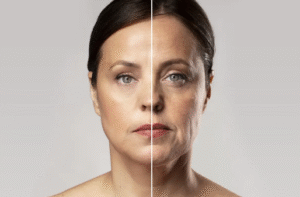
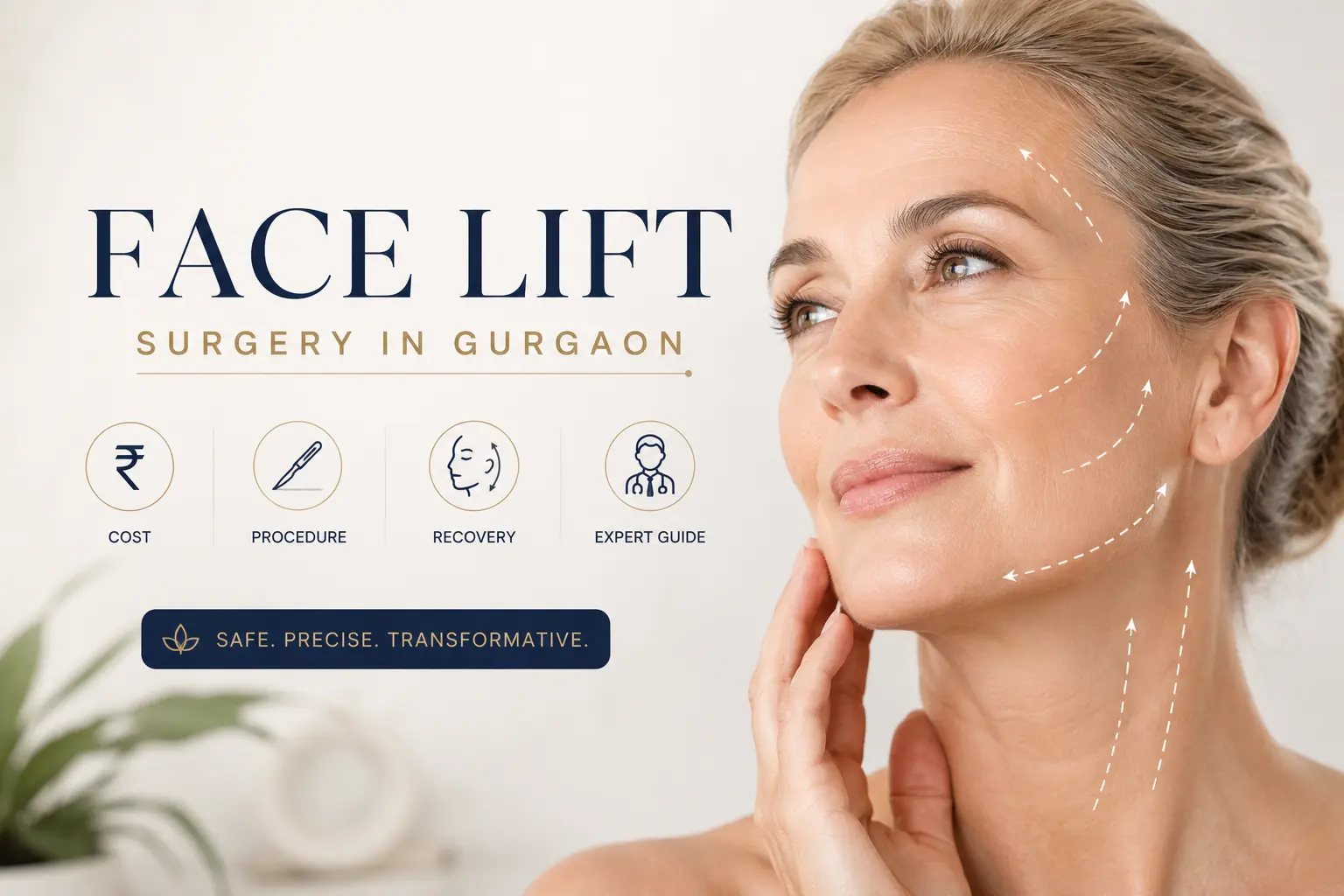
When patients describe what they want from facial rejuvenation surgery, they almost always use skin language: they want the skin to be tighter, the jowls to be firmer, the neck to look cleaner. What they do not know, because it is rarely explained clearly before the consultation, is that the skin is the last thing a facelift surgeon should be working with. Skin stretched and stitched without addressing the tissue layers beneath it produces a result that looks operated, heals with visible tension, and relaxes back toward its pre-operative position within a few years. The natural-looking, long-lasting facelift that patients want is not achieved by tightening the skin. It is achieved by repositioning the facial architecture that the skin sits over.
This anatomical distinction, between a superficial skin-tension facelift and a deeper structural repositioning approach, is the most clinically important thing a patient can understand before choosing a surgeon for face lift surgery in Gurgaon. It determines how natural the result looks, how long it lasts, and whether the face moves naturally or appears pulled. This guide explains what each approach does, what facelift surgery Gurgaon involves at Artemis Hospital, what the cost reflects, and what recovery looks like at each stage.
Book a facelift consultation with Dr. Pradeep Kumar Singh at Artemis Hospital, Gurugram, or call +91 82879 23924 to have your facial anatomy assessed and the appropriate approach recommended.
What a Facelift Actually Does: The SMAS Layer and Why It Matters
The face ages in three dimensions, not just at the surface. Skin loses elasticity and develops lines, but the bigger changes of facial ageing are structural: fat compartments deflate and descend, the ligaments that anchor facial tissue to the underlying bone gradually weaken, and the superficial musculoaponeurotic system, known as the SMAS, laxes and descends, pulling the facial soft tissue downward with it. The SMAS is a continuous layer of muscle and fibrous tissue that sits beneath the facial skin and subcutaneous fat and above the deeper facial muscles and nerves. It is the layer responsible for facial expression and for the structural scaffolding that holds the midface and lower face in their youthful positions.
A facelift that works only at the skin level pulls the skin tighter but leaves the SMAS and the descended facial fat compartments in their displaced positions. The result is a face that looks stretched rather than refreshed, because the skin has been redistributed without the underlying architecture being repositioned. The operated appearance that many patients fear, the tight, windswept look associated with older surgical techniques, is almost always the result of a skin-tension approach rather than a structural SMAS-based correction. When the SMAS is properly addressed, the skin can be repositioned with minimal tension because it is simply redraped over a repositioned foundation, producing a more natural result that also lasts considerably longer.
Facelift Techniques in Gurgaon: Which Approach Is Used and Why
The primary variable in facelift surgery is how the surgeon addresses the SMAS layer. The main approaches are:
SMAS Plication and SMAS-Lift Techniques
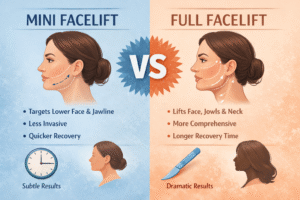
SMAS plication involves placing sutures in the SMAS to fold and shorten it without fully dissecting beneath it. It repositions the SMAS through suture suspension and is a reliable approach for patients with mild to moderate facial laxity who want meaningful improvement with a somewhat shorter recovery than deeper techniques. A 2025 systematic review and meta-analysis published in Aesthetic Plastic Surgery, which analysed data from 2,896 patients, reported a patient satisfaction rate of 87.8 per cent for SMAS techniques at one year or more after surgery. The complication rate was 10 per cent, reflecting the less extensive dissection compared with deeper approaches.
Deep Plane Facelift: The Most Comprehensive Structural Correction
The deep plane facelift dissects beneath the SMAS, releasing the retaining ligaments that tether the facial soft tissue to the underlying bone and allow the descended facial architecture to be repositioned as a single composite unit rather than in separate skin and SMAS layers. Because the tissues are mobilised from their fixed attachments, they can be repositioned in three dimensions without the skin tension that characterises older techniques. The same 2025 systematic review reported patient satisfaction of 94.4 per cent for deep plane techniques, compared with 87.8 per cent for SMAS approaches. Deep plane results are generally considered longer-lasting, with most patients maintaining their result for seven to ten or more years, compared with five to seven years for SMAS approaches, because the structural repositioning addresses the anatomical cause of the ageing change rather than its surface manifestation.
Thread Lift vs Surgical Facelift: An Honest Comparison
The question of a surgical facelift vs thread lift comes up regularly in consultations, and it deserves a direct answer rather than a diplomatic one. Thread lifts, which involve inserting barbed sutures under the skin to lift soft tissue, produce temporary results in carefully selected patients with early, mild facial laxity. Published evidence consistently shows that thread lift results last between twelve and eighteen months before the threads lose their purchase on the tissue and the lift dissipates. A surgical facelift vs thread lift comparison is therefore not a comparison between two equivalent options of different invasiveness. It is a comparison between a temporary, limited procedure and a structural, long-lasting one. Thread lifts are appropriate for patients who are not yet candidates for a surgical facelift and who want a modest, temporary improvement. They are not a substitute for a surgical facelift in patients with moderate to significant facial ageing.
What Face Lift Surgery in Gurgaon Can and Cannot Address
A well-performed facelift addresses the lower face and neck most effectively: the jowls, the jawline, the neck, and the lower cheek. These are the areas where gravitational descent produces the most visible and most consistently correctable ageing changes. A facelift improves the definition of the jawline by lifting the descended lower cheek and jowl tissue back to its correct position, restores the angle between the neck and jaw, reduces the loose skin and platysmal banding in the neck, and improves the overall contour and proportions of the lower face.
What a facelift does not address is the upper and middle face as effectively in isolation. Brow descent, forehead lines, and upper eyelid hooding require separate procedures, a brow lift and upper blepharoplasty, respectively, which may be performed simultaneously with the facelift or independently. Volume loss in the midface, which contributes significantly to the hollow, deflated appearance of ageing, is addressed by fat grafting or fillers rather than by a lift alone. At Artemis Hospital, the consultation for facelift surgery in Gurgaon addresses all of these dimensions, because a patient whose primary concern is the lower face may have midface volume loss that contributes significantly to their aged appearance and that a lift alone will not correct.
Face Lift Cost Gurgaon: What Determines the Price
Face lift cost Gurgaon varies depending on the technique required, the extent of the procedure, whether additional simultaneous procedures are included, the surgeon’s qualification and experience, and the facility where surgery is performed. A standard SMAS facelift involving the lower face and neck has a different cost profile from an extended deep plane facelift, and either may be combined with fat grafting, brow lift, or blepharoplasty, depending on what the patient’s anatomy requires. The following table outlines the primary cost factors:
| Cost Factor | How It Influences Face Lift Cost Gurgaon |
| Surgical technique | SMAS techniques involve less dissection than deep plane approaches; the technique selected for each patient reflects their specific anatomy and the degree of improvement needed |
| Extent of the procedure | A lower facelift and neck lift alone differs in cost from a combined facelift with brow lift, blepharoplasty, or simultaneous fat grafting for volume restoration |
| Surgeon’s qualification | An MCh-qualified plastic surgeon with specific facelift experience commands appropriate fees for the level of training and technical precision the procedure requires |
| Facility | Surgery at a JCI and NABH-accredited hospital such as Artemis Hospital includes anaesthesia team fees, sterile operating theatre costs, and post-operative monitoring, all of which are reflected in the total cost |
| Anaesthesia | Facelift surgery is performed under general anaesthesia, and anaesthesia fees vary with operative duration |
A personalised face lift cost Gurgaon estimate is provided at the consultation at Artemis Hospital after the facial anatomy has been assessed and the appropriate surgical plan agreed upon. Online price ranges published without a prior assessment cannot account for the specific technique, extent, and simultaneous procedures required for each individual patient’s presentation. Patients from Golf Course Road, Sushant Lok, and across South Delhi are encouraged to schedule a consultation rather than compare online figures, because the cost is a function of the clinical plan, not a standard price.
Face Lift Recovery Time: What to Expect at Each Stage
Facelift recovery time is one of the most important practical questions at the consultation, and it is one that benefits from a stage-by-stage account rather than a single average figure. The recovery from facelift surgery in Gurgaon follows a consistent progression, though the specific timeline at each stage varies with the extent of the procedure and the individual patient’s healing rate:
- Days 1 to 3: The most uncomfortable period. Swelling and bruising are most significant, particularly around the eyes, cheeks, and neck. Drains may be placed to prevent fluid accumulation and are typically removed within one to two days. A compression garment is worn continuously around the lower face and neck. Most patients manage with oral pain medication and rest at home.
- Days 4 to 10: Swelling begins to reduce noticeably. Sutures or staples around the hairline and behind the ears are removed at seven to ten days. Most patients describe this as the most psychologically challenging period because the swelling and bruising make it difficult to assess the result. Reassurance at follow-up visits is important during this phase.
- Weeks 2 to 3: The majority of visible bruising has resolved. Many patients return to desk work within two weeks, wearing their hair down to conceal any residual swelling or incision lines around the ears. Social presentation improves significantly. Driving resumes when the neck moves freely, and pain medication is no longer required.
- Weeks 4 to 6: The face settles progressively. The pulled or tight sensation that is common in the first weeks resolves as the swelling subsides and the tissues soften. Light exercise resumes at four to six weeks.
- Months 3 to 6: The residual deep swelling, which is often imperceptible to others, continues to resolve. Scars in the hairline and around the ears fade from pink to pale. The result becomes progressively more natural as the tissues settle.
- Month 6 to 1 year: The final result is assessed. Scars have matured to their permanent, pale, flat appearance. The improvement in jawline definition, jowl reduction, and neck contour is fully established and assessable against the pre-operative photographs.
Combining Facelift With Other Procedures: What Is Typically Done Together
Many patients who undergo facelift surgery in Gurgaon at Artemis Hospital benefit from combining the facelift with complementary procedures in the same operative session, consolidating recovery and producing a more comprehensive facial rejuvenation result than any single procedure alone can achieve:
- Neck lift: Most facelift procedures include a concurrent neck lift because the lower face and neck age together and respond to the same gravitational and structural changes. Addressing the platysmal muscle bands, the loose neck skin, and the neck-jaw angle in the same session as the lower facelift produces a unified, proportionate lower facial contour. In many cases, a neck lift is included as a standard component of the facelift procedure rather than a separate addition.
- Fat grafting: Facelift surgery repositions descended facial tissue but does not restore the volume lost from deflated fat compartments. Fat transferred from the patient’s own body, typically the abdomen or flanks, is injected into the midface, temple, and perioral areas simultaneously with the lift, restoring the volume and contour of a younger face alongside the structural repositioning. The combination of lift and volume restoration produces a more complete and natural rejuvenation than a lift alone.
- Upper blepharoplasty: Hooding of the upper eyelid from excess skin is a common concurrent concern in patients presenting for facelift surgery in Gurgaon. Upper blepharoplasty, performed through an incision concealed in the upper eyelid crease, removes this excess skin and is readily combined with a facelift in the same anaesthetic session.
- Brow lift: Brow descent, where the eyebrow falls below the bony orbital rim, makes the upper face appear heavy and tired and is not improved by a facelift, which works below the ear level. An endoscopic or open brow lift combined with the facelift addresses the complete upper and lower facial ageing picture in a single recovery.
Best Facelift Surgeon Gurgaon: Dr. Pradeep Kumar Singh at Artemis Hospital
A facelift produces a result that is visible for years, and that interacts with how the face moves, ages, and presents in every social interaction. The technique chosen, and the precision with which it is executed, determines whether the result looks refreshed and natural or operated and artificial. For this reason, the qualification and specific experience of the surgeon performing the procedure matter as much for a facelift as for any other operation in plastic surgery.
Dr. Pradeep Kumar Singh performs face lift surgery in Gurgaon at Artemis Hospital, a JCI and NABH-accredited facility in Sector 51, Gurugram. His MCh in Plastic Surgery from SMS Medical College, Jaipur, and Fellowship in Advanced Aesthetic Surgery from St Louis Hospital, Paris, provide the technical breadth and the aesthetic sensibility that facelift surgery requires. Paris training in particular provides exposure to the deep plane and extended SMAS approaches that are less commonly mastered in standard training programmes. As Head of the Department of Plastic Surgery at Artemis Hospital and a member of the Association of Plastic Surgeons of India, Dr. Pradeep Kumar Singh, MCh Plastic Surgery, Fellowship Paris, APSI Member, approaches every facelift consultation with the same principle: the technique must match the anatomy, not a standard procedure applied to every patient regardless of their specific facial ageing pattern.
Patients seeking face lift surgery in Gurgaon travel to Artemis Hospital from Defence Colony, Vasant Vihar, Greater Kailash, Jor Bagh, and across South Delhi, as well as from DLF Phase 2, Golf Course Road, Magnolias, and Sushant Lok in Gurgaon.
Frequently Asked Questions
How much does face lift surgery cost in Gurgaon?
Face lift cost in Gurgaon depends on the technique required, the extent of the procedure, whether simultaneous procedures such as fat grafting, blepharoplasty, or brow lift are included, and the facility. A personalised cost estimate is provided at the consultation at Artemis Hospital after the facial assessment. Contact Artemis Hospital to schedule a consultation with Dr. Pradeep Kumar Singh.
What is the recovery time for a facelift?
Most patients return to desk work within two weeks after facelift surgery in Gurgaon, at which point the visible bruising has largely resolved and the swelling is manageable with appropriate hairstyling. Social confidence is typically restored in three to four weeks. Full return to exercise is permitted at four to six weeks. The final result is assessed at six months to one year, as deep swelling resolves and scars mature over this period.
Is facelift surgery permanent?
The structural repositioning achieved by facelift surgery is permanent: the tissues do not return to their pre-operative displaced position. However, ageing continues after a facelift, and most patients maintain their improved result for seven to ten years before the natural ageing process produces changes that may motivate consideration of a secondary procedure. A facelift turns back the clock rather than stopping it.
What age is best for facelift surgery?
There is no single best age for face lift surgery in Gurgaon. The relevant criterion is the degree of facial laxity present, not the patient’s age. Many patients in their mid to late forties present with sufficient jawline and neck laxity to benefit significantly from facelift surgery, while others in their sixties have anatomy that is better addressed by non-surgical treatments first. The consultation assessment at Artemis Hospital determines whether the degree of laxity present justifies a surgical facelift, whether a less invasive approach is more appropriate, and what the realistic improvement achievable for each patient’s specific anatomy is.
What is the difference between a facelift and a thread lift?
A surgical facelift repositions the SMAS layer and addresses descended facial architecture through deep structural correction, producing results that last seven to ten or more years, depending on technique. A thread lift uses barbed sutures to temporarily suspend facial soft tissue, with results that typically last twelve to eighteen months before dissipating as the sutures lose their purchase. The surgical facelift vs thread lift comparison is not between equivalent options of different invasiveness. It is between a structural, long-lasting correction and a temporary, limited one. Thread lifts are appropriate for early, mild laxity in patients who are not yet ready for a surgical facelift; they are not a substitute for surgery in patients with meaningful facial descent.
What You Are Paying for When You Choose Face Lift Surgery
The cost and recovery of face lift surgery in Gurgaon are straightforward to discuss. What is harder to explain in a brief online search, but more important for the decision, is what the surgery actually does beneath the skin and how the surgeon’s approach to the SMAS layer determines whether the result looks natural or operated, and whether it lasts seven years or two. At Artemis Hospital, every facelift consultation begins with this anatomical explanation, because a patient who understands what the surgery addresses beneath the surface makes a better-informed decision about which technique is right for their anatomy and their goals.
Book now or call +91 82879 23924 to schedule your face lift surgery Gurgaon consultation with Dr. Pradeep Kumar Singh at Artemis Hospital.
Or visit Artemis Hospital, Sector 51, Gurugram, Haryana 122001.
Read patient reviews at Dr. Pradeep Kumar Singh on Google.
Dr. Pradeep Kumar Singh: MCh Plastic Surgery, Fellowship Paris, APSI Member: Head of Plastic Surgery, Artemis Hospital, Sector 51, Gurugram.