When patients ask whether breast implant surgery is safe, the answer is almost always shaped by three decisions they make before the procedure begins: which surgeon they choose, which implant they select, and which facility they use. Breast Implant Safety Gurgaon at Artemis Hospital is built on the clinical evidence that these three choices, made correctly, produce a safety profile where the majority of patients experience no serious complications over more than a decade. The procedure itself, in an accredited hospital with a board-certified plastic surgeon using CDSCO and FDA-approved implants, is among the most studied and safest elective surgical procedures available.
This does not mean breast implant surgery is without risk. Every surgical procedure carries risk, and patients considering breast augmentation surgery in Gurgaon deserve an honest, evidence-based account of what those risks are, how common they are, and how they are managed when they occur. Breast implant complications, including capsular contracture, implant rupture, and infection, are documented and manageable. Rarer concerns, including breast implant illness and the lymphoma associated with highly textured implants, deserve clear explanation. This guide addresses each one.
Book a Breast Implant Safety Gurgaon consultation with Dr. Pradeep Kumar Singh at Artemis Hospital, Gurugram, or call +91 82879 23924 to discuss whether breast augmentation surgery is right for you.
Are Breast Implants Safe Long Term? What Ten Years of FDA Data Shows
Are breast implants safe long term is the question underlying most patients’ anxiety about the procedure. The answer from the evidence is reassuring but conditional. Large-scale FDA post-approval studies following nearly 100,000 patients over ten years confirm that the majority of women with breast implants experience no serious long-term complications. A 2025 systematic review published in the Journal of Clinical Medicine, which analysed 113 studies spanning fifteen years of post-market surveillance data, confirmed that the most commonly reported issues are capsular contracture, seroma, infection, and rupture, all of which are identifiable, treatable, and manageable through structured long-term follow-up.
The conditional element is monitoring. A ten-year FDA study found rupture rates of 7.8 per cent for primary augmentation patients at ten years, meaning over 90 per cent have an intact implant after a decade. However, silicone ruptures are often clinically silent, producing no symptoms that the patient can detect, which means they are only found through imaging. The FDA recommends MRI or ultrasound screening beginning five to six years after silicone implant placement and every two to three years thereafter, regardless of whether the patient has any concerns. This monitoring protocol is a structural component of Breast Implant Safety Gurgaon at Artemis Hospital, not an optional follow-up.
Breast Implant Complications: A Clinically Honest Account
Understanding breast implant complications in detail is what allows patients to give genuinely informed consent. The table below covers every clinically significant risk associated with breast augmentation surgery, what each involves, and how it is managed:
| Complication | What It Is | How It Is Managed |
| Capsular contracture | The scar tissue capsule that naturally forms around every implant becomes abnormally thick and contracts, causing firmness, pain, or shape distortion | Surgical release (capsulotomy) or implant replacement; submuscular placement consistently reduces rates compared with subglandular placement |
| Implant rupture | The implant shell weakens over time. Silicone ruptures are typically clinically silent; saline deflations are immediately visible as the implant loses volume | Routine MRI or ultrasound screening from year five onwards; surgical removal and replacement when rupture is confirmed |
| Infection | Bacterial contamination during or after surgery, typically within the first six weeks | Sterile surgical technique, prophylactic intraoperative antibiotics, and prompt antibiotic treatment if infection develops post-operatively |
| Seroma | Fluid accumulation in the space around the implant, most common in the first few weeks after surgery | Drain placed at the time of surgery; aspiration under ultrasound guidance if seroma persists after drain removal |
| BIA-ALCL | A rare T-cell lymphoma linked specifically to highly textured implants, which are largely discontinued. Not a form of breast cancer | Smooth and low-textured implants carry negligible risk. Highly treatable when caught early through routine monitoring and follow-up |
| Breast implant illness (BII) | A constellation of systemic symptoms including fatigue, joint pain, and cognitive difficulties that some patients attribute to their implants | Implant removal resolves symptoms in approximately two thirds of patients who report BII; the condition is recognised but incompletely understood |
Capsular contracture is the most common breast implant complication. Rates vary between 5 and 15 per cent over ten years, depending on implant type, placement technique, and surgical approach. Submuscular placement, where the implant sits beneath the pectoral muscle rather than directly under the breast tissue, consistently produces lower capsular contracture rates than subglandular placement and is the standard approach at Artemis Hospital for the majority of breast augmentation surgery cases.
Discuss your concerns about Breast Implant Safety Gurgaon with Dr. Pradeep Kumar Singh directly, or call +91 82879 23924 to schedule a consultation.
Are Silicone Implants Safe? Setting the Record Straight on Modern Cohesive Gel
Are silicone implants safe is a question whose persistence owes more to history than to current evidence. The concern originates from older-generation liquid silicone implants withdrawn from the US market in 1992 following reports of leakage and systemic concerns. Modern cohesive silicone gel implants are a categorically different product. Cohesive gel maintains its form under pressure and does not migrate through the implant shell the way early liquid silicone could. Multiple large-scale FDA studies have consistently confirmed that modern cohesive silicone breast implants do not cause breast cancer, do not cause autoimmune disease in the general population, and have a lower short-term rupture rate than saline implants.
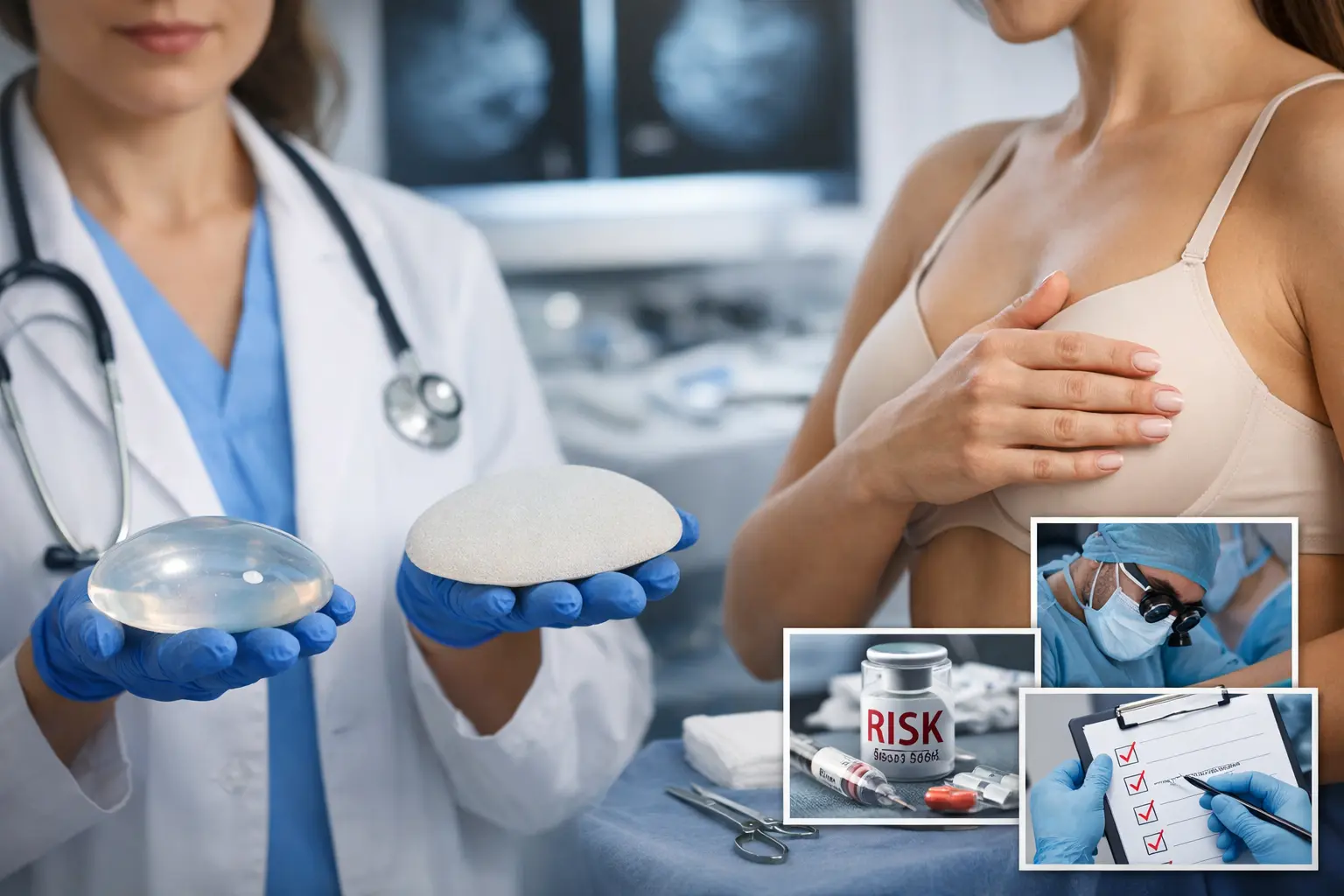
For patients seeking natural-looking breast implants in Gurgaon, cohesive silicone gel is the preferred material because its feel, weight, and movement most closely replicate natural breast tissue, particularly in patients with limited native breast volume. Saline implants, filled with sterile salt water after insertion, offer a smaller incision site and an immediately apparent rupture when deflation occurs, but they feel less natural and have higher short-term rupture rates. All implants used at Artemis Hospital hold CDSCO approval from India’s Central Drugs Standard Control Organisation and carry US FDA certification, meeting the international standards that genuine Breast Implant Safety Gurgaon requires.
Should I Get Breast Implants? What Ideal Candidacy Looks Like
Should I get breast implants is as much a question of timing and candidacy as it is of desire. The patients who achieve the best long-term outcomes from breast augmentation surgery are those who meet the clinical profile for the procedure, and understanding that profile helps patients make the right decision at the right time:
- Good general health: Breast augmentation surgery is performed under general anaesthesia. Pre-existing cardiovascular disease, poorly controlled diabetes, or clotting disorders increase perioperative risk and must be assessed and optimised before proceeding.
- Stable weight for at least six months: Significant weight change after surgery affects implant position and the surrounding breast tissue. The procedure produces its most durable results when body weight has been stable for a minimum of six months beforehand.
- Realistic expectations about what natural-looking breast implants Gurgaon achieves: Breast augmentation produces a proportionate improvement in keeping with the patient’s existing body frame. Patients who understand this produce more consistently satisfied outcomes than those who expect transformation beyond what the anatomy supports.
- Family planning discussed: Pregnancy and breastfeeding after breast implant surgery are possible, but both affect breast tissue and may alter the implant position and result. Patients planning pregnancies should discuss timing openly at the consultation.
- Non-smoker or willing to cease smoking: Smoking impairs tissue healing and increases the risk of breast implant complications, including infection, wound breakdown, and capsular contracture. A minimum of four to six weeks of complete cessation before surgery is required.
Breast Augmentation Procedure Steps and Breast Implant Surgery Recovery Time
Understanding the breast augmentation procedure steps and the breast implant surgery recovery time helps patients plan practically and reduces the anxiety that accompanies the unknown. At Artemis Hospital, the procedure follows a consistent, structured pathway:
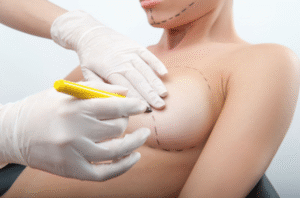
- Pre-operative consultation: Medical history review, physical examination, implant size and profile selection using measurements and 3D imaging, and a full informed consent discussion. This is the stage where implant type, placement, and incision location are confirmed.
- Surgery (1 to 2 hours): Performed under general anaesthesia. The incision is made at the inframammary fold below the breast in the majority of cases. The implant is placed in the submuscular or dual-plane position, and the incision is closed in layers.
- Breast implant surgery recovery time, first week: A supportive surgical bra is worn continuously. Swelling, tightness, and mild to moderate discomfort are expected. Most patients manage with oral pain medication and rest at home for the first five to seven days before returning to desk work.
- Week two to three: Light daily activities resume. No lifting above shoulder height. The implants typically sit higher than their final position during this phase as the pectoral muscle adjusts to the new position.
- Week four to six: Implants begin to drop and settle. A compression band over the upper breast may assist the settling process. Light exercise resumes gradually.
- Month two to three: Full return to exercise and unrestricted activity. Natural-looking breast implants in Gurgaon settle into their permanent position, and the final result is assessed at the three-month follow-up.
- Long-term monitoring: MRI or ultrasound from five to six years after silicone implant placement and every two to three years thereafter, as recommended by the FDA, regardless of whether any symptoms are present.
Why Your Surgeon and Facility Choice Define Breast Implant Safety in Gurgaon
Breast Implant Safety Gurgaon is not a fixed outcome delivered by the implant itself. It is a result shaped by who performs the surgery, where it is performed, and how the long-term follow-up is structured. Complication rates for breast augmentation surgery are not uniform across all settings. A board-certified plastic surgeon performing surgery in a JCI and NABH-accredited hospital, using approved implants, with a structured post-operative monitoring protocol, produces complication rates that are measurably lower than those associated with less-accredited settings and less qualified practitioners.
Dr. Pradeep Kumar Singh is a board-certified plastic surgeon who performs breast augmentation surgery in Gurgaon at Artemis Hospital, a JCI and NABH-accredited facility in Sector 51, Gurugram. His MCh in Plastic Surgery from SMS Medical College, Jaipur, and Fellowship in Advanced Aesthetic Surgery from St Louis Hospital, Paris, provide the clinical foundation for every decision regarding Breast Implant Safety Gurgaon at Artemis Hospital. As Head of the Department of Plastic Surgery and a member of the Association of Plastic Surgeons of India, Dr. Pradeep Kumar Singh, MCh Plastic Surgery, Fellowship Paris, APSI Member, uses only CDSCO and FDA-approved cohesive silicone implants placed in the submuscular or dual-plane position in the vast majority of cases.
Patients seeking breast augmentation surgery in Gurgaon and natural looking breast implants Gurgaon travel to Artemis Hospital from DLF Phase 2, DLF Phase 4, Golf Course Road, Magnolias, Sushant Lok, Sector 56, Nirvana Country, DLF Camelia, Ardee City, Sector 42, M3M Golf Estate, Palam Vihar, Greater Kailash, Defence Colony, Vasant Vihar, Jor Bagh, Gold Links, Shanti Niketan, Haus Khas, Anand Niketan, Gulmohar Park, Green Park, Vasant Kunj, and South Extension.
Frequently Asked Questions
Is breast implant surgery safe?
Yes, for appropriately selected patients treated by a qualified, board-certified plastic surgeon using CDSCO and FDA-approved implants in an accredited hospital facility. Large-scale FDA post-approval studies confirm that over 90 per cent of primary augmentation patients have an intact implant at ten years with routine monitoring in place. Known breast implant complications are manageable when identified early through structured long-term follow-up.
Are breast implants safe long-term?
Are breast implants safe long term is confirmed by a large body of FDA and independent clinical evidence. Modern cohesive silicone gel implants, maintained through routine MRI or ultrasound imaging from year five onwards, have a well-established long-term safety profile. The key condition is maintaining the monitoring schedule even when no symptoms are present, because silicone ruptures are typically silent and detectable only through imaging.
What are the risks of breast implants?
The documented risks include capsular contracture (the most common breast implant complication at 5 to 15 per cent over ten years), implant rupture (approximately 7.8 per cent at ten years for primary augmentation patients), seroma, infection, changes in nipple sensation, and implant malposition. Rare risks include BIA-ALCL, linked specifically to highly textured implants not used at Artemis Hospital, and breast implant illness, which resolves in approximately two-thirds of patients after implant removal.
Can breast implants cause cancer?
Standard cohesive silicone and saline breast implants do not cause breast cancer. Multiple large-scale epidemiological studies have found no increased incidence of breast cancer in women with breast implants. The one cancer association that exists is BIA-ALCL, a rare immune-cell lymphoma linked specifically to aggressively textured implant surfaces that are no longer widely used. Smooth cohesive silicone implants used at Artemis Hospital carry no documented increased cancer risk.
Are silicone implants safe?
Yes. Are silicone implants safe is answered clearly by FDA-approved ten-year clinical studies: modern cohesive silicone implants do not cause cancer, do not cause autoimmune disease in the general population, and have lower short-term rupture rates than saline implants. The concern about silicone originates from a previous generation of liquid silicone devices withdrawn in the 1990s, which were a fundamentally different product from the cohesive gel implants used today.
The Three Decisions That Define Your Safety Outcome
Breast Implant Safety in Gurgaon is not determined by the procedure in isolation. It is determined by the surgeon chosen, the implant selected, and the facility used, and by the commitment to the monitoring schedule that keeps the result safe over the years that follow. Patients who make all three decisions correctly, choosing a board-certified plastic surgeon, using CDSCO and FDA-approved cohesive silicone implants, and undergoing surgery at a JCI and NABH-accredited hospital with a structured follow-up protocol, consistently achieve the safe, lasting outcomes that breast augmentation surgery in Gurgaon is capable of producing for the right candidate.
Book now or call +91 82879 23924 to schedule your breast augmentation consultation with Dr. Pradeep Kumar Singh at Artemis Hospital, Gurugram.
Or visit Artemis Hospital, Sector 51, Gurugram, Haryana 122001.
Read verified patient reviews at Dr. Pradeep Kumar Singh on Google.
Dr. Pradeep Kumar Singh: MCh Plastic Surgery, Fellowship Paris, APSI Member: Head of Plastic Surgery, Artemis Hospital, Sector 51, Gurugram.