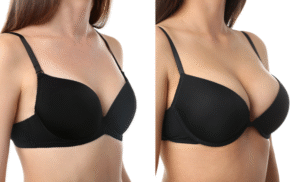
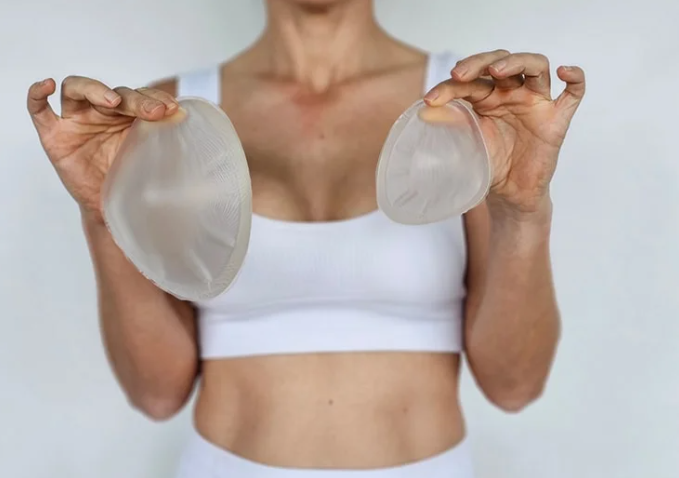
The most common source of dissatisfaction after breast augmentation is not surgical error — it is a mismatch between what the patient imagined and what surgery delivered. Choosing an implant based on a photograph of someone else’s result, a sizer bra, or a size number quoted verbally is making one of the most permanent decisions of your life based on highly indirect information.
3D breast augmentation planning at Artemis Hospital, Gurugram, addresses this directly. Using three-dimensional imaging technology, patients see a simulation of their own body — not a stock model, not another patient’s result — with different implant volumes, profiles, and shapes applied to their specific anatomy. The decision moves from abstract to visual, and from uncertain to informed.
Book a 3D planning consultation with Dr. Pradeep Kumar Singh at Artemis Hospital, or call +91 82879 23924 to explore how imaging technology can guide your breast augmentation decision.
How 3D Breast Augmentation Simulation Works
Three-dimensional breast imaging captures the patient’s torso from multiple angles simultaneously. The system constructs a 3D model of the chest wall, breast tissue, and body contour — accurately reflecting the patient’s specific measurements, including breast base width, tissue thickness, nipple position, chest wall curvature, and natural asymmetry between sides.
Once the model is created, different implant parameters are applied digitally — volume, profile, and shape — and the software simulates how each option would integrate with the patient’s specific tissue. The result is a side-by-side comparison examined together during consultation. The patient sees herself at 275cc, 325cc, and 375cc. She sees the difference between moderate and high-profile implants on her specific frame. The conversation moves from ‘I want to look natural’ — a phrase open to many interpretations — to ‘I want to look like this’, pointing at a specific simulation image on her own body.
What 3D Imaging Shows You — and What It Cannot
Patients who approach 3D simulation with accurate expectations get significantly more value from it than those who treat it as a precise preview of their outcome. Here is what it shows accurately — and where its limits are:
What 3D imaging shows:
- Volume relationships: The relative size difference between implant options is accurately represented against the patient’s frame — a 50cc difference can look significant or negligible depending on specific chest dimensions.
- Profile impact: The difference between a moderate-profile and high-profile implant of the same volume is clearly visible in simulation, helping patients identify which projection shape suits their frame.
- Asymmetry: Natural breast asymmetry — present to some degree in virtually all women — is visible in the 3D model, allowing implant selection to address it intentionally.
What 3D imaging does not show: the exact post-surgical appearance — individual tissue response, pocket formation, and healing patterns introduce variables the simulation cannot model. Scar location and maturation are not represented. How implants move dynamically when active is not captured in a static model. These are areas where the surgeon’s clinical assessment complements the imaging technology.
3D Planning vs Traditional Implant Selection: The Practical Difference
| With 3D Imaging Planning | Without 3D Imaging Planning |
| Patient sees a simulation of their own body at different implant volumes | Patient chooses based on sizer bras and reference photos of other women |
| Surgeon and patient discuss the same visual reference during consultation | Surgeon and patient may have different mental images of ‘natural-looking’ |
| Implant profile and dimensions selected against patient’s specific measurements | Implant selected based on general size categories |
| Asymmetries and differences between left and right breast identified pre-surgery | Asymmetries may only be formally noted during the procedure itself |
| Post-surgical expectations anchored to simulation, reducing surprise | Expectations based on abstract descriptions, increasing risk of misalignment |
How 3D Planning Changes the Implant Size Decision
The most common application of 3D imaging in breast augmentation surgery consultations at Artemis Hospital is resolving indecision between two or three implant volume options that sound similar in a consultation but look meaningfully different in simulation.
A patient uncertain between 275cc and 325cc sees both options on her own body in the same image. A patient fixated on a specific number can see whether it produces the result she has in mind on her specific frame, or whether a slightly different volume achieves the same visual outcome more naturally. This is especially valuable for patients with narrower chest wall dimensions — common across North India and South Delhi — where a higher volume implant can project beyond the natural breast boundary in a way that a slightly lower volume would not.
For patients considering breast lift surgery in combination with augmentation — an augmentation mastopexy — 3D planning helps visualise the combined effect of implant volume and tissue repositioning. This is especially useful because the visual result of a combined procedure is more complex than augmentation alone, and the simulation gives both patient and surgeon a shared reference point for the outcome goal.
Making the Most of Your 3D Planning Consultation
A 3D breast augmentation planning consultation at Artemis Hospital is a technical and clinical conversation, not a sales presentation. Patients who arrive with specific questions get the most from it. The following are worth preparing:
- Focus on proportionality, not volume: Ask to see the option that looks most proportionate to your frame from a frontal, three-quarter, and lateral view — not the largest option.
- Ask about your natural asymmetry: Pre-existing differences between your left and right breasts are visible in the 3D simulation. Ask how implant selection will account for them.
- Compare profiles at the same volume: A moderate and high-profile implant at the same volume looks significantly different. Seeing both on your specific frame in simulation often changes the decision.
Advanced Planning at Artemis Hospital, Gurugram
Dr. Pradeep Kumar Singh incorporates 3D imaging into every breast augmentation consultation at Artemis Hospital because implant selection is the single most significant factor in whether a patient is satisfied at twelve months. A technically perfect procedure with the wrong implant produces an outcome that does not match the patient’s goal.
His MCh in Plastic Surgery from SMS Medical College, Jaipur, and Fellowship from St Louis Hospital, Paris, inform an approach that combines 3D simulation with clinical assessment of tissue thickness, chest wall dimensions, and skin elasticity — factors that the simulation models but that require surgical experience to interpret accurately.
Patients considering breast augmentation surgery travel to Artemis Hospital from DLF Phase 2, Sector 56, Ardee City, Palam Vihar, Nirvana Country, Defence Colony, Anand Niketan, Jor Bagh, Haus Khas, Shanti Niketan, Gold Links, MG Road, and Sector 42 for consultations that combine 3D imaging with the clinical judgement of a board-certified cosmetic surgeon.
Frequently Asked Questions
Is 3D breast augmentation simulation available in Gurgaon?
Yes. Yes. 3D breast imaging is available at Artemis Hospital, Sector 51, Gurugram, as part of the breast augmentation consultation with Dr. Pradeep Kumar Singh. A patient-specific 3D model is generated from photographic capture, allowing implant volume, profile, and shape to be visualised on the patient’s own body before any decision is made.
How accurate is a 3D breast augmentation simulation?
3D simulation accurately represents volume and profile differences on a patient-specific model. It does not predict the exact post-surgical appearance — individual tissue response and healing introduce variables that imaging cannot model. The simulation is best understood as a precise visual reference for decision-making, not a guaranteed preview. Patients who treat it this way consistently report that it improved the quality of their implant selection decision.
Can 3D planning help if I am undecided between two implant sizes?
This is precisely where 3D planning adds the most value. Seeing 275cc and 325cc — or 300cc and 350cc — applied to your own body in the same image makes a volume difference that sounds abstract in a consultation tangibly visible. Patients who arrive undecided between two options almost always leave a 3D planning consultation with a clear preference, because the visual comparison resolves what verbal description and generic reference photographs cannot.
Does 3D simulation show how the implants will look in clothing?
The simulation shows the body with projected implant dimensions from multiple angles. While it does not digitally dress the patient, the lateral and three-quarter views give a useful indication of how implant profile and volume will affect the silhouette in fitted clothing. Patients planning for a lehenga blouse or backless gown can use these views to assess whether a given implant profile fits the clothing silhouette they have in mind.
What implant profiles are available, and how does 3D imaging help me choose?
Implant profiles — low, moderate, moderate-plus, and high — describe the ratio of projection to base width at a given volume. A high-profile 300cc implant projects further forward with a narrower base than a moderate-profile 300cc implant. On a narrow chest wall, this difference matters significantly, and it is clearly visible in the 3D simulation. Most patients at Artemis Hospital discover that their preferred look in simulation corresponds to a different profile from the one they assumed before consultation.
Can I use 3D imaging to plan a breast lift with augmentation?
Yes. For patients considering a combined augmentation mastopexy — breast lift surgery alongside implants, 3D imaging helps visualise the combined effect of tissue repositioning and implant volume. Because the visual outcome of a combined procedure is more complex than augmentation alone, having a simulation reference that both patient and surgeon can refer to throughout the planning process is particularly valuable. Dr. Pradeep Kumar Singh uses 3D imaging in all combined procedure consultations to ensure that the outcome goal is clearly defined before any surgical decision is finalised.
Informed Decisions Produce Better Results
3D planning does not eliminate uncertainty — no technology does —, but it replaces guesswork with a shared visual language between patient and surgeon. The difference between choosing based on another person’s photograph and choosing based on your own 3D simulation is the difference between hoping the result looks right and making the decision with the best available information.
Book now or call +91 82879 23924 to schedule your 3D breast augmentation planning consultation with Dr. Pradeep Kumar Singh.
Or visit Artemis Hospital, Sector 51, Gurugram, Haryana 122001.
Read patient reviews and learn more at Dr. Pradeep Kumar Singh on Google.
Dr. Pradeep Kumar Singh — MCh Plastic Surgery, Fellowship Paris, APSI Member — Artemis Hospital, Sector 51, Gurugram.