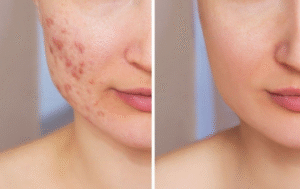
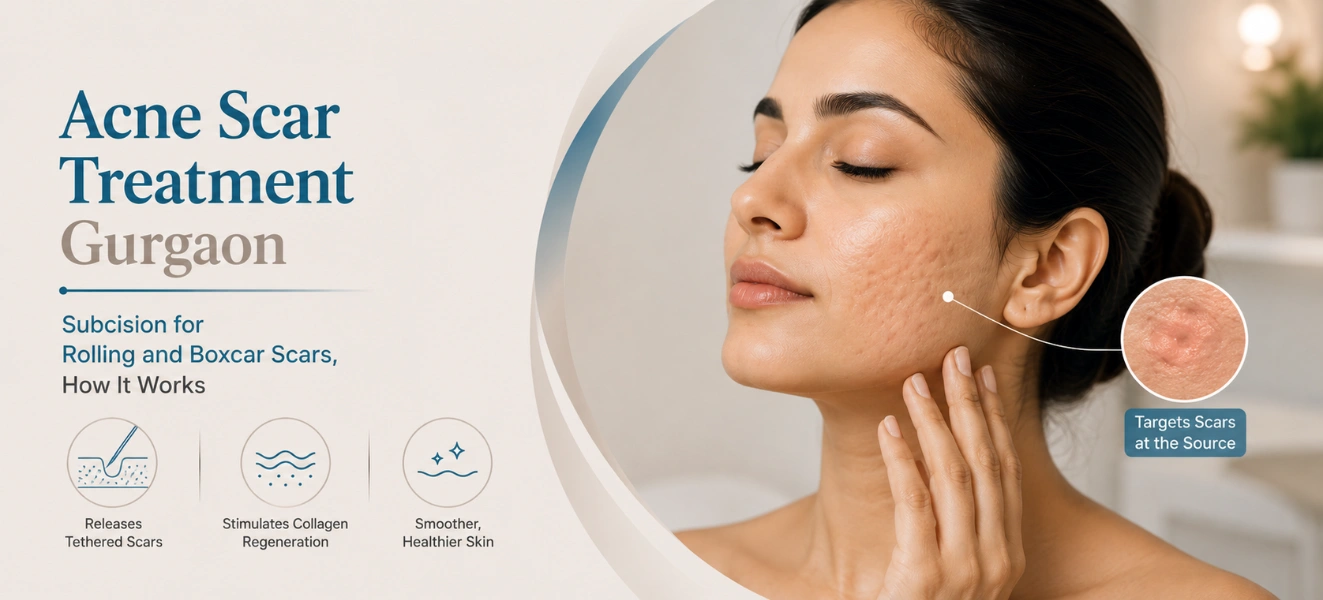
Not all acne scars encountered in acne scar treatment in Gurgaon respond equally to laser resurfacing, microneedling, or chemical peels. The treatments that work well for improving the surface texture of shallow, broad-based scars frequently produce disappointing results in deeper, tethered scars, because the fundamental problem in these scars is structural: fibrous bands beneath the skin surface anchor the scar base to the deeper tissue and pull it downward, creating a depression that surface-level energy-based treatments cannot release. Subcision is the technique that specifically addresses this structural tethering, and for rolling scars and certain boxcar scars it is the most important first step in any acne scar treatment programme in Gurgaon before any laser or energy-based treatment is added.
This guide explains what subcision is, how it works mechanically, which scar types respond to it and which do not, how many sessions are typically needed, what recovery looks like, and how subcision is combined with laser resurfacing and other modalities to produce the most comprehensive improvement in acne scar depth and texture.
Call +91 82879 23924 or arrange a consultation at Artemis Hospital, Gurugram, to have your scar type assessed and the appropriate treatment sequence recommended.
What Is Subcision and How Does It Treat Acne Scars in Gurgaon?
Subcision is a minor surgical procedure that uses a fine needle or small cannula inserted through the skin to mechanically cut the fibrous bands that tether the base of an acne scar to the deeper dermis or subcutaneous tissue. When a rolling scar or deep boxcar scar forms, the scar tissue contracts during healing and forms collagen bridges that connect the dermal base of the scar to the tissue beneath it, pulling the skin surface downward and creating the visible depression. These fibrous tethers are the specific target of subcision.
The procedure is performed under local anaesthetic. The needle or cannula is inserted at an angle beneath the scar, and a gentle fanning motion releases the fibrous connections beneath the scar base, allowing the depressed skin to lift toward the surface. The procedure simultaneously stimulates collagen production at the release site through the controlled trauma of the needle passes, adding a regenerative component to the mechanical release. The combination of structural release and collagen stimulation produces a gradual elevation of the scar floor over the weeks following each session.
At Artemis Hospital, the acne scar treatment programme in Gurgaon uses subcision with either a Nokor needle or a blunt cannula. The acne scar treatment in Gurgaon is performed with either a Nokor needle (a specially designed bevel-tipped needle with cutting edges) or a blunt cannula in patients with significant vascularity risk, where the blunt cannula’s inability to cut blood vessels reduces the bruising that Nokor needle subcision characteristically produces. The choice between needle and cannula subcision is made on the basis of the scar depth, the extent of tethering, and the patient’s bruising tolerance.
Important Read: Eyelid Tightening Surgery Gurgaon: Upper vs Lower Blepharoplasty, Which Addresses Your Concern?
Which Acne Scar Types Respond Best to Subcision in Acne Scar Treatment in Gurgaon?
Rolling Scars: The Primary Indication
Rolling scars, characterised by broad, shallow waves across the skin surface with ill-defined edges, are produced by deep fibrous bands that tether large areas of skin to the subcutaneous tissue. The wave pattern visible on the skin surface is produced by the irregular tension of these tethering bands across the dermis. Rolling scars are the strongest indication for subcision: the tethering mechanism is the dominant problem, and releasing it produces the most immediate visible improvement of any acne scar type treated with subcision. In good rolling scar responders, a single session can produce visible elevation of the scar depression that is immediately apparent and continues to improve over four to six weeks.
Boxcar Scars: Selective Response
Boxcar scars are well-defined depressions with sharp, vertical edges. They are produced by tissue loss in a specific, localised zone rather than by the broad tethering that produces rolling scars. Shallow to moderate-depth boxcar scars with tethered bases respond to subcision because the vertical edges of the scar frequently have fibrous tethering alongside the tissue volume deficit. Releasing the tethering elevates the scar floor and softens the sharp edges. Deep boxcar scars with very little tissue remaining in the scar floor do not respond as completely to subcision alone because even after tethering release, the volume deficit in the scar floor remains, and additional volume replacement through filler or fat grafting may be needed to complete the correction.
Icepick Scars: Poor Subcision Response
Icepick scars are narrow, deep channels extending vertically through the dermis. They do not respond to subcision because they are not produced by tethering bands but by deep follicular plugging that creates a narrow, steep-walled channel. The appropriate treatment for icepick scars is TCA CROSS (trichloroacetic acid chemical reconstruction of skin scars), where a high-concentration TCA solution is applied with a fine-tipped applicator directly into the base of the icepick channel, producing a controlled injury-repair cycle that promotes fibrosis and gradual channel closure from the base upward.
Is Subcision for Acne Scar Treatment in Gurgaon Painful, and How Many Sessions Are Needed?
Subcision for acne scar treatment in Gurgaon is performed under topical anaesthetic cream applied for thirty to forty minutes before the procedure, followed by local anaesthetic infiltration into the treatment zones. The procedure itself is not painful once local anaesthetic is active, but the local anaesthetic injection produces brief stinging before the area is fully numb. The procedure takes thirty to sixty minutes depending on the number of scar areas being treated.
Post-procedurally, significant bruising is the expected consequence of needle subcision, particularly with the Nokor needle technique. The bruising typically peaks at two to three days and resolves over seven to fourteen days. Swelling at the treated sites is present for three to five days. Most patients return to office work within two to three days with makeup coverage of the bruising. The treated scars appear improved within one to two weeks as the initial inflammation resolves, and continue to improve over four to six weeks as new collagen fills the released space.
The number of sessions required for acne scar treatment with subcision in Gurgaon depends on the severity and extent of the tethered scarring. Most patients require two to four sessions spaced four to six weeks apart. Patients with extensive, deeply tethered rolling scars across the cheeks and temples require more sessions than those with limited rolling scar involvement. The improvement is cumulative: each session releases additional tethering and stimulates additional collagen, and the full result is assessable at three to four months after the final session.
Patients from Sahibabad and Ghaziabad who travel to Artemis Hospital, Sector 51, Gurugram, for acne scar treatment in Gurgaon receive a scar type mapping at the initial consultation, which identifies the proportions of rolling, boxcar, and icepick scarring, the extent of tethering, and the areas of the face most affected, before any treatment sequence is planned.
Important Read: Tummy Tuck Surgery Gurgaon: Mini vs Full Abdominoplasty, Which One Do You Need in 2026?
Can Subcision Be Combined With Laser Treatment for Acne Scars in Gurgaon?
Yes, and combination sequencing produces significantly better outcomes than either treatment alone. The evidence-based sequence at Artemis Hospital for mixed acne scarring (rolling scars plus atrophic boxcar scars plus surface texture changes) is:
- Stage 1: Subcision for all tethered rolling and deep boxcar scars in the first session, releasing the structural tethering that would otherwise limit the response to subsequent energy-based treatments. Subcision before laser is significantly more effective than laser before subcision, because the tethered scar cannot elevate in response to the collagen stimulation the laser produces if the structural tethering remains intact.
- Stage 2: Fractional CO2 or MNRF beginning four to six weeks after the subcision session, when the initial subcision response has developed. The fractional laser sessions address the residual scar texture, the atrophic depth of boxcar scars that subcision alone does not fully correct, and the overall skin texture quality in the inter-scar zones.
- Stage 3: PRF or exosome adjunct at selected sessions alongside the fractional laser, to enhance the collagen-stimulating response above what the energy-based treatment alone achieves.
- Stage 4: TCA CROSS for any icepick scars identified at the initial assessment, performed at a separate session to subcision and laser to allow accurate visualisation of the narrow icepick channels.
Frequently Asked Questions
What is subcision and how does it treat acne scars in Gurgaon?
Subcision uses a fine needle or cannula inserted under the skin to mechanically cut the fibrous bands that pull rolling and boxcar scar bases downward, releasing the tethering and allowing the depressed scar to rise toward the skin surface. The procedure is performed under local anaesthesia and simultaneously stimulates new collagen at the release site. It is the most effective single-session treatment for tethered acne scars and the critical first step in any comprehensive acne scar treatment programme in Gurgaon.
Is subcision painful and how many sessions are needed in Gurgaon?
Subcision is performed under local anaesthesia and is not painful during the procedure. Significant bruising for seven to fourteen days after each session is the expected consequence of needle subcision. Most patients need two to four sessions spaced four to six weeks apart for rolling and deep boxcar scars. The result continues to improve for three to four months after the final session as new collagen fills the released scar space.
Which acne scar types respond best to subcision in Gurgaon?
Rolling scars, produced by broad fibrous tethering bands, are the strongest indication for subcision and typically show the most dramatic improvement. Shallow to moderate-depth boxcar scars with tethered bases also respond well. Deep boxcar scars may need filler or fat grafting to complete the correction after subcision releases the tethering. Icepick scars do not respond to subcision and are better treated with TCA CROSS.
Important Read: Home Remedies for Acne Scars: What Works, What Does Not and When to See a Specialist in Gurgaon
How long is recovery after subcision for acne scars in Gurgaon?
Bruising peaks at two to three days and resolves over seven to fourteen days. Swelling at the treated sites lasts three to five days. Most patients return to office work within two to three days with makeup coverage. The scar improvement becomes visible within one to two weeks and continues to improve over four to six weeks as new collagen develops in the released scar space.
Can subcision be combined with laser treatment for acne scars in Gurgaon?
Yes, and combination sequencing produces better outcomes than either alone. The correct sequence is subcision first (to release structural tethering), followed by fractional laser or MNRF four to six weeks later (for residual texture and depth improvement), with PRF or exosome adjunct at selected sessions and TCA CROSS for any icepick scars in a separate session. Subcision before laser is significantly more effective than laser before subcision.
How much does subcision for acne scar treatment cost in Gurgaon?
Subcision cost in Gurgaon at Artemis Hospital depends on the extent of the tethered scar involvement and the number of sessions in the planned programme. A personalised cost estimate for the full acne scar treatment programme in Gurgaon is provided at the initial scar mapping consultation. Call +91 82879 23924.
Tethered acne scars require structural release before surface treatments can work. Call +91 82879 23924 or visit Artemis Hospital, Sector 51, Gurugram, Haryana 122001.
Reviews: Dr. Pradeep Kumar Singh on Google.
Dr. Pradeep Kumar Singh: MCh Plastic Surgery, Fellowship Paris, APSI Member: Head of Plastic Surgery, Artemis Hospital, Sector 51, Gurugram.