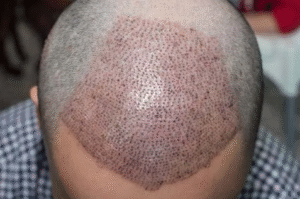
Hair transplant surgery in India is one of the fastest-growing surgical specialities, and Delhi NCR has one of the highest concentrations of hair transplant clinics in the country. For patients researching hair transplant surgery in Gurgaon, the primary challenge is not finding a clinic but understanding what the different techniques, FUE, FUT, and DHI, actually involve, how they differ in terms of natural results, scarring, recovery, and graft survival, and whether the technique being marketed is the right one for their specific hair loss pattern and hair characteristics.
This guide explains each technique with clinical precision, compares them on the factors that matter most for natural results, and establishes the candidacy criteria that determine which approach is appropriate for each patient. Dr. Pradeep Kumar Singh, MCh Plastic Surgery, Fellowship Paris, APSI Member, performs hair transplant surgery in Gurgaon at Artemis Hospital, a JCI and NABH-accredited facility in Sector 51, Gurugram, with the same standards of patient assessment and technique precision applied to every other procedure in the plastic surgery practice.
To find out which technique is right for your hair transplant surgery in Gurgaon, call +91 82879 23924 or arrange a consultation at Artemis Hospital, Gurugram.
What Is Follicular Unit Transplantation, and Who Is It Best For?
Follicular Unit Transplantation (FUT) involves removing a horizontal strip of scalp skin from the permanent donor zone at the back of the head. The strip, typically 15 to 25 centimetres long and 1 to 1.5 centimetres wide, is dissected under a stereoscopic microscope by a team of trained technicians into individual follicular units: naturally occurring groups of one to four hairs that are the basic biological unit of hair growth. These follicular units are then implanted into the recipient zone through small incisions.
FUT’s primary advantage is graft yield. Because the follicular units are dissected under magnification from an intact strip, the transection rate (accidental cutting of hair follicles during extraction) is lower than in FUE, and the number of grafts obtainable per session is higher. For patients who need a large number of grafts, 3,000 or more, in a single session, FUT is still considered the technically superior approach by many hair transplant surgeons for maximising graft count and minimising follicle damage. Its limitation is the linear scar in the donor area, which becomes visible when hair is worn very short. For patients who wear their hair short at the back, FUT may not be the preferred approach.
What Is Follicular Unit Extraction, and Why Has It Become the Standard?
Follicular Unit Extraction (FUE) harvests individual follicular units one by one from the donor zone using a fine circular punch of 0.8 to 1.0 millimetres in diameter. The punch creates a small circular incision around each follicular unit, which is then extracted with fine forceps. FUE leaves no linear scar, instead producing tiny circular marks that are largely invisible even when the hair is worn very short. This is the primary reason FUE has become the dominant technique in hair transplant surgery in Gurgaon and globally: the ability to wear short hairstyles without a visible donor scar is important to most patients.
The technical challenge in FUE is the transection rate. Each follicular unit must be extracted cleanly without cutting the follicles within it. In experienced hands using the appropriate punch size and extraction technique for the patient’s specific hair characteristics, transection rates of 3 to 8 per cent are reported in published studies. In less experienced hands, transaction rates above 20 per cent have been documented, representing significant follicle waste. For Indian hair, which tends to be coarser, curlier, and with a higher follicular unit density than that of many other ethnic groups, the FUE punch angle and technique must be adapted to the specific hair curl angle to achieve low transection rates. This is a technique-specific skill that varies considerably between practitioners.
What Is DHI Hair Transplant, and How Does It Differ From FUE?
Direct Hair Implantation (DHI) is a variation of the FUE technique. In standard FUE, the extracted follicular units are temporarily held outside the body while recipient incisions are created in the scalp, and then the grafts are placed into those incisions. In DHI, a specialised implanter pen (the Choi implanter) is used to create the recipient incision and place the graft simultaneously in a single step. The implanter pen is pre-loaded with a follicular unit and then inserted into the scalp at the correct angle and depth, releasing the graft as it is withdrawn.
The claimed advantages of DHI over standard FUE are faster graft implantation (reducing the time grafts spend outside the body), potentially higher graft survival, and the ability to implant between existing hair without shaving the recipient area (unshaven DHI). Published comparative studies have not consistently demonstrated a statistically significant advantage in graft survival for DHI over FUE performed by an equally skilled surgeon. The difference in outcome between DHI and FUE depends primarily on the operator’s skill and the care taken with graft handling, not on the implanter pen itself. DHI does have a practical advantage for patients who want to minimise visible shaving, particularly women and patients with partial hair loss who do not want the transplanted area to be visible during recovery.
FUE vs FUT vs DHI: Which Gives the Best Natural Results in Gurgaon?
| Factor | FUT | FUE in Gurgaon | DHI in Gurgaon |
| Donor scar | Linear scar; visible at short hair lengths | Tiny circular marks; largely invisible at short lengths | Same as FUE; tiny circular marks |
| Graft yield per session | Highest; lower transection rate | Moderate to high; depends on operator skill | Same as FUE in same session |
| Suitable for large sessions (3000+ grafts) | Yes; preferred by many surgeons for large sessions | Yes; may require multiple sessions for very large needs | Yes; but implantation is slower |
| Recovery | Linear scar requires sutures; 10 to 14 days | Faster; no sutures; 5 to 7 days return to office | Similar to FUE; slightly longer implantation time |
| Best natural result | High graft survival; high density possible | Natural results with experienced practitioner | Natural results; advantage in unshaven/female cases |
| Indian hair specifics | Strip dissection avoids curl-related transection | Punch angle critical for curly Indian hair | Same technical considerations as FUE |
What Determines Graft Survival After Hair Transplant Surgery in Gurgaon?
Graft survival rate, the proportion of transplanted follicles that grow permanently, is the most clinically important measure of a hair transplant surgery result and the factor most directly under the surgeon’s and technician team’s control. Published data from high-volume hair transplant centres report graft survival rates of 90 to 95 per cent with optimal technique. Factors that determine graft survival include:
- Time out of the body: Follicular units deteriorate rapidly when outside the body at room temperature. Studies show that graft survival begins declining after two hours of ischaemic time. At Artemis Hospital, grafts are stored in hypothermic preservation solution at 4 degrees Celsius to extend viability during the implantation phase.
- Handling trauma: Rough handling of grafts with forceps crushes the follicles. Every follicular unit should be handled by the fibrous tissue surrounding the follicle (the perifollicular tissue), not by the hair shaft or the follicle body itself.
- Recipient site angle and depth: Grafts placed at the wrong angle or wrong depth relative to the surrounding native hair grow in the wrong direction and disrupt natural hair flow. Matching the angle, direction, and depth of the recipient sites to the existing hair pattern is what produces the natural-looking hairline that characterises high-quality hair transplant surgery in Gurgaon.
- Recipient site density: Placing too many grafts per square centimetre in a single session compromises the blood supply to the recipient zone and reduces survival of the grafts in the overcrowded area. The safe maximum density per session is approximately 30 to 40 grafts per square centimetre in a single pass.
Patients from Connaught Place and Central Delhi who travel to Artemis Hospital, Sector 51, Gurugram, for hair transplant surgery in Gurgaon receive a full donor density and hair loss staging assessment using the Norwood scale before any graft number or technique is confirmed. The surgical plan is developed from this assessment, not from a standard number quoted before examination.
What Is the Cost of Hair Transplant Surgery in Gurgaon?
Hair transplant cost in Gurgaon is typically quoted per graft, with prices varying between clinics based on the technique, the qualification of the surgeon, and the facility. At Artemis Hospital, the hair transplant surgery cost in Gurgaon is provided at the consultation after the donor density assessment determines the number of grafts required. Quoting a per-graft price before assessing how many grafts the patient actually needs and how many their donor zone can safely provide is a marketing-first approach rather than a clinical one. A personalised estimate is provided at the consultation after this assessment. Call +91 82879 23924 to arrange an appointment.
Frequently Asked Questions
How much does hair transplant surgery cost in Gurgaon?
Hair transplant cost in Gurgaon is calculated per graft and depends on the total number of grafts required, which is determined by the extent of hair loss and the patient’s goals. A personalised estimate is provided at the consultation at Artemis Hospital, Sector 51, Gurugram, after the donor density and hair loss staging assessment. Call +91 82879 23924.
What is the difference between FUE and FUT hair transplants?
FUE extracts individual follicular units one by one using a fine circular punch, leaving no linear scar. FUT removes a strip of scalp and dissects it into follicular units under magnification, leaving a linear donor scar but allowing higher graft yields per session with lower transection rates. FUE is preferred for patients who wear short hairstyles; FUT is preferred for patients requiring very large graft sessions. Both produce natural results when performed by experienced practitioners.
How long does hair transplant surgery last in Gurgaon?
Hair transplant results are permanent for the transplanted follicles because the donor follicles from the permanent zone at the back of the head carry the genetic resistance to the dihydrotestosterone (DHT) that causes male pattern hair loss. The transplanted hairs maintain this resistance in their new location and continue growing permanently. Native hair in the recipient zone not covered by the transplant may continue thinning over time, which is why a complete plan accounting for future hair loss progression is important at the initial consultation.
Am I a good candidate for hair transplant surgery in Gurgaon?
Good candidacy for hair transplant surgery in Gurgaon requires adequate donor hair density at the back and sides of the scalp, stable hair loss for at least twelve months, realistic expectations about density achievable in the recipient area, and good general health for surgery under local anaesthesia. Patients with diffuse hair loss across the entire scalp, including the donor zone, are not good candidates because the donor hair carries the same propensity for loss as the recipient zone. Candidacy is assessed at the clinical consultation through examination of the donor zone and hair loss staging.
How long is the recovery after hair transplant surgery in Gurgaon?
Most patients return to desk work within five to seven days after FUE hair transplant surgery in Gurgaon. The transplanted area has small scabs that shed over ten to fourteen days. The transplanted hairs shed at two to four weeks after surgery (shock shedding), which is a normal part of the process. New growth begins emerging at three to four months and reaches its full density and length by twelve to eighteen months. The final result of hair transplant surgery in Gurgaon is assessable at twelve to eighteen months.
How many grafts do I need for a hair transplant in Gurgaon?
The number of grafts required depends on the degree of hair loss (Norwood scale staging), the density of existing hair in the recipient zone, and the patient’s goals for coverage and density. A Norwood III to IV presentation typically requires 1,500 to 2,500 grafts for adequate frontal coverage. A Norwood V to VI presentation may require 3,000 to 4,000 grafts across one or more sessions. The exact graft requirement is estimated at the consultation through examination of the recipient area and the donor zone density.
Hair transplant surgery in Gurgaon at Artemis Hospital is planned from a clinical examination, not from a standard package. Call +91 82879 23924 or visit Artemis Hospital, Sector 51, Gurugram, Haryana 122001.
Reviews: Dr. Pradeep Kumar Singh on Google.
Dr. Pradeep Kumar Singh: MCh Plastic Surgery, Fellowship Paris, APSI Member: Head of Plastic Surgery, Artemis Hospital, Sector 51, Gurugram.