The question that matters most before any hair transplant surgery in Gurgaon is not which technique to use or how many grafts you want. It is whether you are a suitable candidate in the first place. Hair transplantation works by surgically redistributing existing hair from a donor zone, typically the back and sides of the scalp, to thinning or bald areas. If the donor zone does not have sufficient density, or if hair loss is still actively progressing and has not stabilised, no technique delivers a satisfying long-term result regardless of how it is marketed.
This guide explains candidacy assessment, how FUE and FUT differ and why the choice between them matters less than the surgeon’s judgement, what determines hair transplant surgery Gurgaon cost, and what the recovery and results timeline honestly looks like. Patients from Gurgaon and across Delhi NCR who understand these points arrive at the consultation better prepared to evaluate their options and make the right decision.
Book a hair transplant consultation with Dr. Pradeep Kumar Singh at Artemis Hospital, Gurugram, or call +91 82879 23924 to have your scalp assessed and candidacy evaluated honestly.
Are You a Suitable Candidate for Hair Transplant Surgery in Gurgaon?
Hair transplant surgery in Gurgaon, like any hair transplantation procedure, is a surgical redistribution of a finite resource. The donor zone, the area of the scalp at the back and sides that is genetically resistant to the hormone DHT and therefore not subject to androgenetic hair loss, contains a fixed number of follicular units. Every graft harvested from this zone is a permanent reduction in its density. A well-planned hair transplant conserves the donor zone carefully over the course of the patient’s lifetime, because the same zone may need to supply further sessions if hair loss continues beyond the initial procedure.
The first candidacy assessment is whether hair loss has stabilised. A patient whose hair loss is still progressing rapidly at age twenty-two or twenty-three is not an ideal candidate for hair transplantation because the procedure would restore today’s pattern, only for continued loss around the transplanted area to create a new unnatural result in the coming years. Most plastic surgeons recommend waiting until the mid-twenties at the earliest, and until hair loss has been stable for a meaningful period, before proceeding. Medical management with finasteride and minoxidil is often the appropriate first step for patients presenting too early for surgery.
The second assessment is donor density. A patient with advanced Norwood Grade 6 or 7 hair loss and a sparse donor zone may not have sufficient follicles available to achieve adequate coverage of the bald area, even across multiple sessions. Trichoscopy, the microscopic assessment of follicular health and density across both the donor and recipient zones, provides the clinical data needed to estimate the total graft yield available and plan sessions accordingly.
Indian hair carries a natural advantage for hair transplantation. Its higher individual fibre calibre and slight natural wave create better visual coverage per graft than fine, straight hair. A well-executed session on Indian hair typically achieves greater apparent density per graft than the same session on finer hair types, which is a clinically meaningful advantage in planning the coverage achievable for a given donor supply.
FUE vs FUT: What Actually Matters When Choosing a Technique
The debate between FUE and FUT is presented by many clinics as a choice between old and new technology. It is more accurately a choice between two different methods of extracting follicular units from the donor zone, each with specific advantages and trade-offs. The technique selected for a hair transplant in Gurgaon should follow the patient’s anatomy and clinical requirements, not a preset preference.
FUE Hair Transplant Gurgaon: Individual Follicle Extraction
In a FUE hair transplant in Gurgaon, individual follicular units are extracted one by one from the donor zone using a small circular punch, typically 0.8 to 1.0 mm in diameter. Each extraction leaves a tiny, round scar that becomes effectively invisible once the surrounding hair grows back. FUE leaves no linear scar, allows the patient to wear their hair short without visible evidence of surgery, and involves a somewhat faster initial recovery than FUT. Its primary constraint is that the number of grafts extractable in a single session is limited by the time required for individual extraction, and the technique demands considerable precision and experience to achieve a high graft survival rate.
FUT Hair Transplant Gurgaon: Strip Harvesting for Higher Graft Yield
In a FUT hair transplant in Gurgaon, a strip of scalp is removed from the donor zone under local anaesthesia, the wound is closed with sutures or a trichophytic closure, and the strip is then dissected under magnification into individual follicular units for implantation. FUT allows a larger number of grafts to be harvested in a single session than FUE, which makes it a valid option for patients who need extensive coverage and whose donor zone anatomy is better suited to strip harvesting. The trade-off is a permanent linear scar at the donor site, which limits the ability to wear hair very short. For patients who prefer longer hairstyles and need maximum graft yield from a single session, FUT remains a clinically appropriate choice.
What Matters More Than Technique: Surgeon Judgement and Graft Handling
The technique selected for hair transplant surgery in Gurgaon matters considerably less than who performs the surgery and how the extracted grafts are handled between extraction and implantation. Graft survival rate, the percentage of transplanted follicles that successfully establish and grow permanently, is the primary determinant of a hair transplant result. Survival rates are directly influenced by the time grafts spend outside the body, the temperature and hydration of the storage solution, the trauma applied during extraction and implantation, and the precision of the implantation depth and angle. An experienced surgeon performing FUE with careful graft handling will consistently produce better results than an inexperienced technician performing the same technique at a higher volume.
Hair Transplant Cost Gurgaon: What Determines the Price
Hair transplant cost in Gurgaon is most commonly quoted on a per-graft basis, and the total cost is therefore determined primarily by the number of grafts required. The number of grafts required depends on the extent of the area to be covered, the target density, the available donor supply, and the hair calibre and wave that determine how many grafts are needed to achieve a given visual density. Beyond graft count, several other factors shape the overall cost:
| Cost Factor | How It Affects Hair Transplant Cost Gurgaon |
| Number of grafts | The primary cost driver. A Norwood Grade 3 typically requires 2,000 to 3,000 grafts; Grade 5 or above may require 4,000 or more across sessions. |
| Technique: FUE vs FUT | FUE typically costs more per graft than FUT because of the time and skill involved in individual extraction. FUT allows higher graft yield at lower cost per graft. |
| Surgeon’s qualification | A board-certified plastic surgeon commanding appropriate fees for MCh-level training and specific hair transplant experience. Surgeon-led procedures produce consistently better graft survival and result quality than technician-led ones. |
| Facility | Hair transplant surgery performed in a JCI and NABH-accredited hospital involves higher facility standards, anaesthesia support, and sterile operating conditions, which are reflected in the cost. |
| PRP or GFC adjuncts | PRP (platelet-rich plasma) or GFC (growth factor concentrate) injections, combined with the hair transplant session, improve graft survival and stimulate native hair. They add to the session cost but produce better overall outcomes. |
At Artemis Hospital, a personalised cost estimate for hair transplant surgery in Gurgaon is provided at the consultation after trichoscopy, donor assessment, and graft planning are completed. Quoted per-graft prices published online cannot account for the specific graft requirements of each patient’s hair loss pattern and donor supply. Patients are encouraged to schedule a consultation rather than compare online figures, because the total cost is a function of the clinical plan, not a fixed price.
What Hair Transplant Surgery in Gurgaon Actually Involves
Hair transplant surgery in Gurgaon at Artemis Hospital is a single-day procedure performed under local anaesthesia with oral sedation. The patient remains awake but comfortable throughout. A typical session takes between four and eight hours, depending on the number of grafts being transplanted. The procedure follows a consistent sequence:
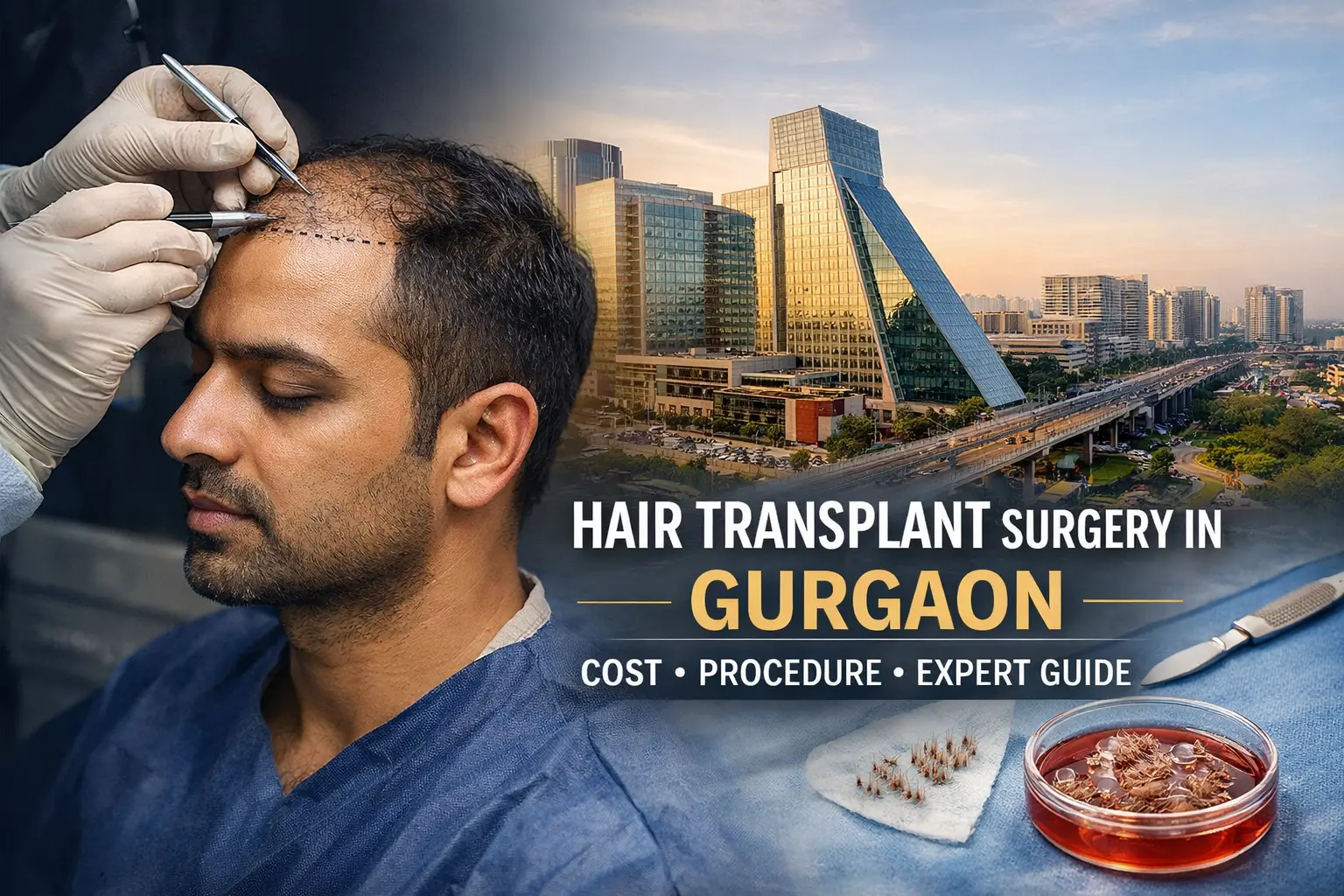
- Hairline design and zone marking: The surgeon marks the recipient zone and designs the hairline before any extraction begins. Hairline design is among the most artistically demanding aspects of hair transplantation, requiring an understanding of how the hairline will interact with the patient’s facial proportions and how it will age over time as surrounding native hair continues its natural pattern of loss.
- Donor zone preparation and extraction: The donor area at the back and sides of the scalp is trimmed and anaesthetised. In FUE hair transplant in Gurgaon, individual follicular units are extracted one by one. In FUT, the strip is removed and immediately transferred to the dissection team, who work under magnification to prepare individual grafts.
- Graft storage and preparation: Extracted grafts are stored in a chilled, appropriately buffered solution to maintain viability while the recipient zone is prepared. This stage is critical: poorly handled grafts do not survive implantation, and graft survival is the primary driver of result quality.
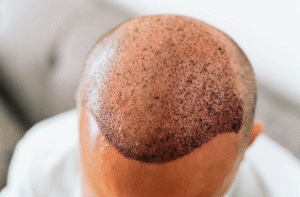
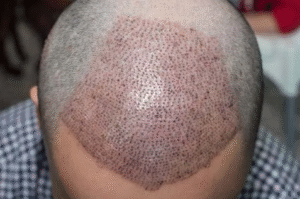
- Recipient zone preparation and implantation: The recipient area is anaesthetised, and the surgeon creates recipient sites at precise angles and depths that replicate the natural growth direction of the patient’s hair. Grafts are then implanted one by one into these sites, with the density and distribution planned to achieve the agreed coverage.
- Immediate post-operative care: Dressings are applied to the donor site. The recipient area is left open. Detailed post-operative care instructions cover washing, activity restriction, and medications for the first two weeks.
Hair Transplant Results Timeline: What to Expect and When
One of the most important expectations to set before hair transplant surgery in Gurgaon is that the results are not immediately visible and that the process between surgery and final result is counterintuitive. Understanding the timeline prevents unnecessary anxiety during the months of apparent non-progress:
| Stage | What Happens |
| Days 1 to 10 | Scabbing forms around transplanted grafts and at the donor site. Mild swelling may extend to the forehead. Grafts are fragile during this period and must not be disturbed. Scabs shed naturally by day ten. |
| Weeks 2 to 8: Shock loss | Transplanted hairs shed. This is the most alarming phase for patients, but it is completely normal and expected. The follicles remain alive beneath the skin even after the shaft sheds. This is not graft loss. |
| Months 3 to 4 | New hair shafts begin to emerge from the transplanted follicles. Hair at this stage is fine, soft, and lighter in colour than the final result. Initial growth is visible but not yet representative of the final outcome. |
| Months 6 to 8 | Hair thickens, darkens, and the coverage improvement becomes clearly visible. Most patients see a significant and satisfying result by month eight. |
| Months 10 to 12 | Full result is established. The transplanted hair has reached its final calibre, texture, and density. This is the point at which the outcome is assessed and any additional sessions are planned if required. |
Best Hair Transplant Surgeon Gurgaon: Dr. Pradeep Kumar Singh at Artemis Hospital
Dr. Pradeep Kumar Singh performs hair transplant surgery in Gurgaon at Artemis Hospital, a JCI and NABH-accredited facility in Sector 51, Gurugram. Hair transplantation performed in an accredited hospital setting, under a board-certified plastic surgeon with MCh-level training, is meaningfully different from a clinic-based procedure performed by a technician under nominal medical supervision. The difference is visible in graft survival rates, hairline design quality, and the consistency of results across different hair loss grades and hair types.
At Artemis Hospital, every hair transplant surgery Gurgaon consultation begins with a trichoscopy assessment of both the donor and recipient zones, a detailed discussion of hair loss stage and future progression, and an honest evaluation of what is achievable for the specific patient’s donor supply and coverage requirements. Patients are not offered more grafts than their donor zone can safely provide, and they are not booked for surgery if medical management or further observation is the more appropriate recommendation at that stage. As Head of the Department of Plastic Surgery and a member of the Association of Plastic Surgeons of India, Dr. Pradeep Kumar Singh, MCh Plastic Surgery, Fellowship Paris, APSI Member, applies the same standard of clinical honesty to hair restoration that governs every other surgical recommendation at Artemis Hospital.
Patients seeking hair transplant surgery Gurgaon travel to Artemis Hospital from DLF Phase 2, DLF Phase 4, Golf Course Road, Magnolias, Sushant Lok, Sector 56, Nirvana Country, DLF Camelia, Ardee City, Sector 42, M3M Golf Estate, Palam Vihar, Greater Kailash, Defence Colony, Vasant Vihar, Jor Bagh, Gold Links, Shanti Niketan, Haus Khas, Anand Niketan, Gulmohar Park, Green Park, Vasant Kunj, and South Extension.
Frequently Asked Questions
How much does hair transplant surgery cost in Gurgaon?
Hair transplant cost in Gurgaon is primarily determined by the number of grafts required, the technique used, the surgeon’s qualifications, and the facility. A Norwood Grade 3 patient requiring 2,000 to 3,000 grafts will have a significantly different cost from a Grade 5 patient requiring 4,000 or more grafts across sessions. A personalised cost estimate is provided at the consultation after trichoscopy and graft planning. Contact Artemis Hospital to schedule a consultation with Dr. Pradeep Kumar Singh.
Is FUE or FUT better for hair transplant in Gurgaon?
Neither technique is categorically better. FUE hair transplant Gurgaon leaves no linear scar, is better suited for patients who prefer shorter hairstyles, and is appropriate for most standard graft requirements. FUT allows higher graft yield from a single session and may be preferable for patients needing extensive coverage with a suitable donor zone. The correct choice is determined by the patient’s anatomy, hair loss grade, lifestyle preferences, and coverage requirements, not by which technique is more commonly advertised.
How long does it take to see results from hair transplant surgery?
The transplanted hair sheds in the first six to eight weeks after surgery, which is normal and expected. New growth begins emerging from months three to four. A satisfying, clearly visible result is typically established by months six to eight. The final result, including full fibre calibre and density, is assessed at twelve months. The complete results timeline for hair transplant surgery in Gurgaon spans approximately ten to twelve months from the procedure date.
Are hair transplant results permanent?
Yes. The donor follicles transplanted during a hair transplant in Gurgaon are genetically resistant to DHT, the hormone responsible for androgenetic hair loss. Once successfully established, they continue to grow for life. However, the native hair surrounding the transplanted area may continue its natural pattern of loss over time, which is why comprehensive long-term planning at the initial consultation, including medical management of ongoing hair loss with finasteride or minoxidil, is as important as the surgical procedure itself.
Who is a good candidate for hair transplant surgery in Gurgaon?
A good candidate for hair transplant surgery in Gurgaon is typically above the mid-twenties, has a hair loss pattern that has been stable for a meaningful period, has a donor zone with sufficient density to support the coverage required, and has realistic expectations of what transplantation can achieve for their specific hair loss grade. Patients whose loss is still rapidly progressing, whose donor zone is sparse, or who have diffuse unpatterned alopecia rather than androgenetic pattern loss may not be suitable for transplantation and benefit more from medical management first.
Candidacy First, Technique Second, Cost Third
The sequence that produces the best outcomes from hair transplant surgery in Gurgaon is always: assess candidacy honestly, choose the technique appropriate to the anatomy, and then understand what that plan costs. Patients who start by researching cost and technique before establishing whether they are a good candidate often make decisions that do not serve them well long-term. At Artemis Hospital, every hair transplant surgery Gurgaon consultation begins with the candidacy assessment, because everything that follows depends on it.
Book now or call +91 82879 23924 to schedule your hair transplant surgery Gurgaon consultation with Dr. Pradeep Kumar Singh at Artemis Hospital.
Or visit Artemis Hospital, Sector 51, Gurugram, Haryana 122001.
Read patient reviews at Dr. Pradeep Kumar Singh on Google.
Dr. Pradeep Kumar Singh: MCh Plastic Surgery, Fellowship Paris, APSI Member: Head of Plastic Surgery, Artemis Hospital, Sector 51, Gurugram.