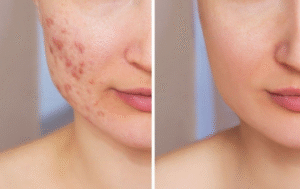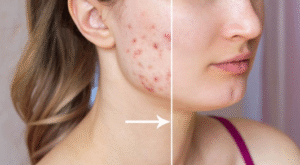
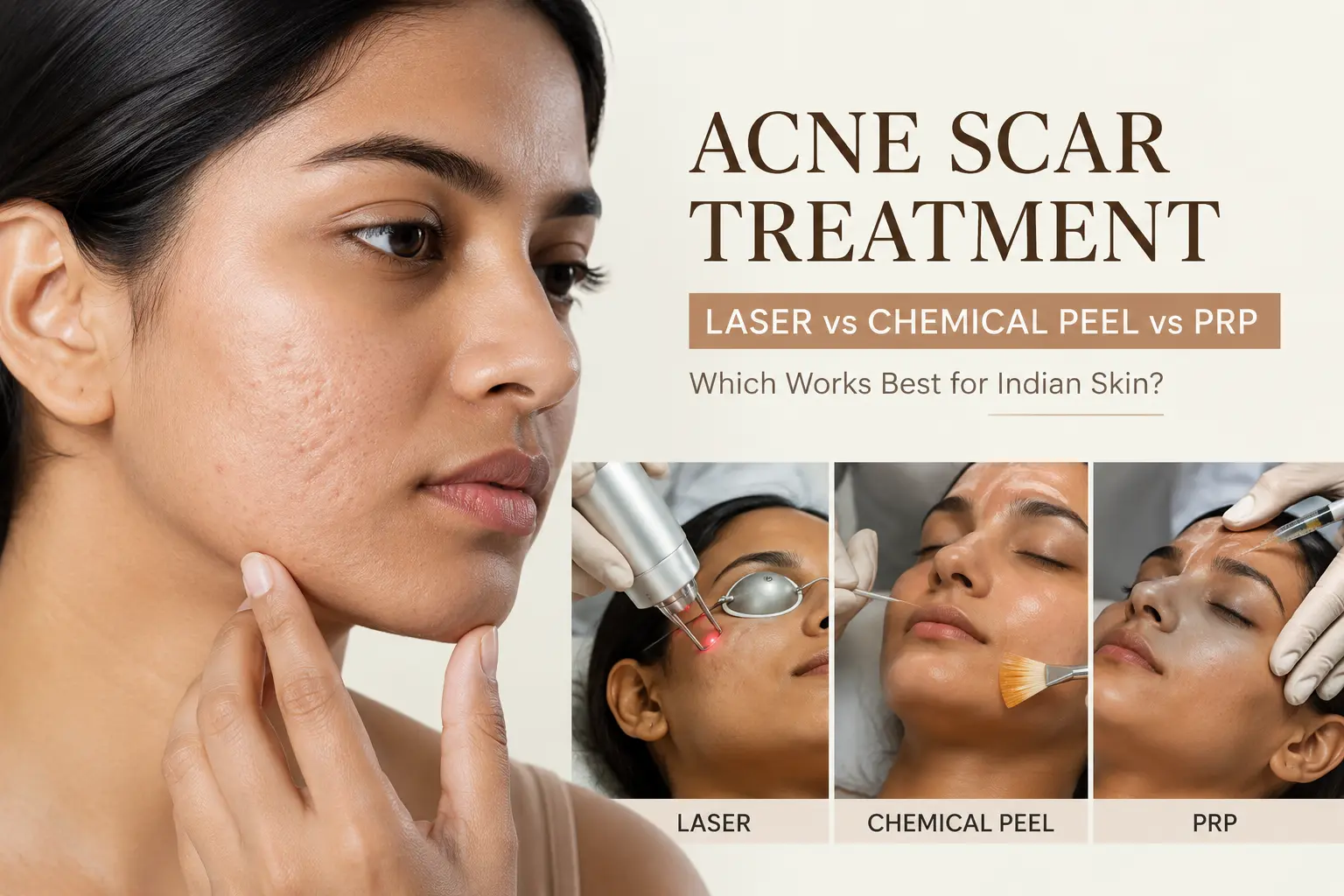
Three treatment modalities dominate acne scar treatment in Gurgaon and across India: fractional laser resurfacing, chemical peels, and platelet-rich plasma (PRP). All three are offered at clinics across Delhi NCR under a variety of names and protocols. All three have a clinical evidence base. None of the three is the right treatment for every patient, every scar type, or every skin tone. The confusion patients face is not whether to treat, but which treatment to choose, and whether the treatment being recommended is actually appropriate for their specific scars and skin.
The answer depends on two variables that must be assessed before any treatment recommendation is made: the type of acne scarring present and the patient’s Fitzpatrick skin type. These two variables together determine which modality is both effective and safe for a given patient. Acne scar treatment in Gurgaon at Artemis Hospital begins with this assessment at every consultation, before any treatment protocol is discussed, because applying the wrong treatment to the wrong scar type in the wrong skin tone produces, at best, no improvement and at worst new pigmentation problems that are harder to treat than the original scars.
To have your scars classified and the right treatment recommended, call +91 82879 23924 or arrange a consultation at Artemis Hospital, Gurugram.
Why Indian Skin Changes Everything About Acne Scar Treatment
Indian skin falls predominantly in Fitzpatrick Types III to V, and this has more influence on acne scar treatment choice than any other single factor. The reason is melanin. Indian skin contains more melanin-producing cells per unit area than lighter skin types, and these cells are more reactive to thermal stimulation, ultraviolet exposure, and skin injury. When a treatment delivers heat or creates surface injury in the skin, the melanocytes in Indian skin respond by producing more melanin, which is deposited in the damaged or heated zone and creates post-inflammatory hyperpigmentation (PIH). This PIH can be more difficult to treat than the original acne scars and may persist for months.
This does not mean that laser treatment or chemical peels are unsafe for Indian skin. It means that the protocols, energy settings, chemical concentrations, and treatment intervals must be specifically adapted for Indian skin tone rather than applied from protocols developed for lighter Fitzpatrick Types I and II. Every acne scar treatment Gurgaon plan at Artemis Hospital is developed with the patient’s specific Fitzpatrick type as a primary parameter, because the appropriate starting energy, peel concentration, and treatment interval differ meaningfully between Types III and V even within the Indian skin spectrum.
Acne Scar Type: The Other Essential Variable
Before comparing treatment modalities, it is necessary to clarify what type of acne scarring is present, because the three main categories respond to different treatments:
- Post-inflammatory hyperpigmentation (PIH): Flat, pigmented marks left by healed spots. Not a true scar; no tissue loss. Responds well to chemical peels and topical depigmenting agents. Does not respond to structural treatments that target the dermis.
- Atrophic scars (rolling, boxcar, icepick): Tissue loss below the skin surface creates indentations. Requires treatments that reach the dermis to stimulate collagen. Responds to fractional laser and MNRF; moderate response to PRP; poor response to superficial chemical peels alone.
- Hypertrophic or keloidal scars: Raised scars from excess collagen deposition. Require a completely different approach: intralesional corticosteroids, silicone sheeting, or ablative treatment of the scar tissue. Do not respond well to laser resurfacing or standard peels.
Most patients presenting for acne scar treatment in Gurgaon have a mixed presentation: some PIH marks and some atrophic scarring coexisting on the same face. This mixed presentation is the most common clinical scenario and often responds best to a sequenced combination approach rather than a single modality.
Laser Acne Scar Treatment in Gurgaon: The Deepest Structural Effect
Fractional laser resurfacing, using fractional CO2 or Er: YAG technology, remains the most effective single modality for structural atrophic acne scarring in Gurgaon and globally. The fractional approach creates columns of ablation through the skin, triggering an injury-repair cycle that produces new collagen in the dermal zones where the scarring has caused collagen deficiency. Over three to six months following each session, the new collagen gradually remodels the scar walls, reducing their depth and improving the overall skin texture.
For Indian skin, conservative energy settings with extended intervals between sessions (minimum six weeks) are essential to avoid PIH from thermal overload of the melanocytes. A 2025 systematic review examining fractional laser outcomes in Fitzpatrick Types III to V found that conservative fractional CO2 protocols produced significant atrophic scar improvement with acceptable PIH rates when intervals of six to eight weeks between sessions were maintained. The improvement per session is more modest than with aggressive protocols designed for lighter skin, but cumulative improvement across three to five sessions is clinically meaningful.
Chemical Peel Acne Scar Treatment in Gurgaon: Best for PIH and Superficial Texture
Chemical peels use acids applied to the skin surface to cause controlled superficial damage, stimulating skin cell turnover and collagen production. The most relevant peels for acne scar treatment in Gurgaon are glycolic acid, salicylic acid, and trichloroacetic acid (TCA) peels at varying concentrations.
For Indian skin, superficial and medium-depth peels using salicylic acid (20 to 30 per cent) or glycolic acid (30 to 70 per cent) are the most commonly appropriate choices for PIH reduction and superficial skin texture improvement. These peels remove the pigmented outer layers of the epidermis and stimulate mild collagen production in the papillary dermis, improving PIH marks and the overall evenness of the skin surface. They do not, however, reach the mid-to-deep dermis where atrophic scar tissue is located, which means they produce minimal improvement in icepick, boxcar, or rolling scars.
TCA peels at 15 to 30 per cent penetrate to a medium depth and can improve mild to moderate atrophic scarring to a greater degree than superficial peels, but they carry a higher PIH risk in Indian skin and require careful patient selection. Chemical peels are most appropriately used for PIH management and superficial texture improvement as part of a combined treatment programme, or for patients with mild acne marks rather than significant structural scarring.
PRP Acne Scar Treatment in Gurgaon: Growth Factor Stimulation
Platelet-rich plasma (PRP) treatment for acne scars uses plasma concentrated from the patient’s own blood, rich in growth factors, injected into or microneedled into the dermis at the scar sites. The growth factors in PRP, including platelet-derived growth factor (PDGF), transforming growth factor-beta (TGF-beta), and vascular endothelial growth factor (VEGF), stimulate fibroblast activity, collagen synthesis, and angiogenesis in the treated dermis, supporting the skin’s natural repair processes.
PRP has a very favourable safety profile in Indian skin because it uses the patient’s own blood components and carries a negligible risk of PIH or adverse skin reaction. Published clinical studies report modest improvement in shallow atrophic scars and skin quality with PRP alone, but consistent improvement in atrophic scar depth when PRP is combined with microneedling (PRP with dermaroller or MNRF) compared with microneedling alone. The evidence base for PRP as a standalone treatment for significant atrophic acne scarring is not as strong as for fractional laser, and it is most clinically valuable as an adjunct to other modalities rather than as a primary treatment for structural scars.
Laser vs Chemical Peel vs PRP: The Comparison for Indian Skin in 2026
| Factor | Fractional Laser in Gurgaon | Chemical Peel in Gurgaon | PRP in Gurgaon |
| Best scar type | Atrophic: rolling, boxcar; moderate icepick | PIH and superficial texture; mild atrophic with medium-depth peels | Shallow atrophic; best as combination adjunct |
| Depth of effect | Mid to deep dermis | Superficial to medium dermis depending on concentration | Dermis via growth factor diffusion; limited depth |
| PIH risk in Indian skin | Moderate; conservative settings and intervals required | Moderate for medium-depth peels; low for superficial peels | Very low; autologous material |
| Sessions required | 3 to 5 sessions, spaced 6 to 8 weeks | 4 to 6 sessions, spaced 3 to 4 weeks | 4 to 6 sessions; best combined with MNRF or microneedling |
| Best used | Alone for structural atrophic scars; combined with subcision for tethered rolling scars | For PIH and superficial texture; as a maintenance treatment between laser sessions | As an adjunct to MNRF or fractional laser to enhance collagen response |
| Downtime | 2 to 5 days post-treatment redness and mild crusting | 1 to 3 days mild redness and peeling | Minimal; mild redness for 24 hours |
The Most Effective Approach for Most Patients: A Sequenced Combination
The clinical consensus for acne scar treatment in Gurgaon for Indian skin in 2026 is that the most effective approach for patients with mixed PIH and atrophic scarring is a sequenced combination rather than a single modality. A typical evidence-based programme might include:
- Stage 1: Subcision for tethered rolling scars before any energy-based treatment. Releasing the fibrous tethering bands that pull the rolling scar downward allows the scar to elevate to the skin surface and respond significantly better to subsequent laser or MNRF treatment.
- Stage 2: Fractional CO2 or MNRF for atrophic scar remodelling, using conservative Indian skin settings with six to eight-week intervals. Three to four sessions over six to eight months produce cumulative improvement in scar depth and texture.
- Stage 3: Chemical peels between laser sessions to maintain PIH reduction and improve the overall skin tone around the scar zones. Salicylic or glycolic peels at appropriate concentrations can be used safely between laser sessions to accelerate PIH improvement.
- Adjunct: PRP combined with MNRF at some sessions to enhance the collagen-stimulating response above what MNRF alone achieves, particularly in patients with shallow rolling scars and skin quality concerns alongside the structural changes.
Patients from Lajpat Nagar and CR Park who attend the acne scar treatment consultation in Gurgaon at Artemis Hospital receive a scar-type classification and a Fitzpatrick skin type assessment before any protocol is recommended. The treatment programme that follows is built around these findings, not around a standard protocol applied to all patients regardless of their specific presentation.
Frequently Asked Questions
What is the best treatment for acne scars in Gurgaon?
The best acne scar treatment in Gurgaon depends on the scar type and the patient’s Fitzpatrick skin type. Fractional CO2 or MNRF produces the best results for structural atrophic scars. Chemical peels are most effective for PIH and superficial texture. PRP is most valuable as an adjunct to MNRF or laser rather than as a standalone treatment. Most patients with mixed presentations benefit from a sequenced combination approach.
How much does acne scar treatment cost in Gurgaon?
Acne scar treatment cost in Gurgaon depends on the modality, the number of sessions in the planned programme, and the facility. Fractional laser and MNRF sessions are individually more expensive than chemical peels or PRP, but a comprehensive programme combining modalities is priced at the consultation after the scar type and skin tone assessment determines the appropriate plan. Call +91 82879 23924 to arrange an assessment at Artemis Hospital.
How many sessions does acne scar treatment need?
Most atrophic acne scar treatment programmes in Gurgaon involve three to five fractional laser or MNRF sessions spaced six to eight weeks apart. Chemical peel programmes involve four to six sessions spaced three to four weeks apart. PRP as an adjunct is typically added at selected sessions within the primary programme. The total number of sessions is determined at the initial assessment based on the severity of scarring and the degree of improvement targeted.
Does laser treatment permanently remove acne scars?
Laser acne scar treatment in Gurgaon produces permanent improvement in scar depth and texture through collagen remodelling. The improvement achieved by each session is lasting because the new collagen produced does not revert. However, existing acne continues to produce new marks if not controlled, and the ageing process affects skin quality over time. Most patients with well-treated atrophic scars maintain their improvement for many years, provided active acne is managed and sun protection is consistent.
Is a chemical peel safe for acne scars on Indian skin?
Yes, when the appropriate peel type and concentration are selected for the patient’s Fitzpatrick skin type. Superficial peels using salicylic acid (20 to 30 per cent) or glycolic acid (30 to 70 per cent) are safe in Indian skin with appropriate pre-treatment preparation and post-treatment sun protection. Medium-depth TCA peels require more careful patient selection and carry higher PIH risk in darker skin types. Deep peels are generally not appropriate for Indian skin. At Artemis Hospital, peel selection and concentration are matched to each patient’s skin type at the acne scar treatment consultation in Gurgaon.
What is PRP treatment for acne scars, and how effective is it?
PRP uses concentrated growth factors from the patient’s own blood, injected or microneedled into the dermis at the scar sites, to stimulate collagen synthesis and skin repair. It is safe in Indian skin because it uses autologous material and carries a negligible PIH risk. As a standalone treatment for significant atrophic acne scars, its effectiveness is modest. As an adjunct to MNRF or fractional laser, it consistently enhances the collagen response above what the energy-based treatment produces alone. PRP is an appropriate addition to the treatment programme for patients with shallow atrophic scars and skin quality concerns.
Acne scar treatment in Gurgaon that is effective for Indian skin starts with classifying the scars and the skin tone before selecting any modality. To have your acne scars assessed at Artemis Hospital, call +91 82879 23924 or visit Artemis Hospital, Sector 51, Gurugram, Haryana 122001.
Reviews: Dr. Pradeep Kumar Singh on Google.
Dr. Pradeep Kumar Singh: MCh Plastic Surgery, Fellowship Paris, APSI Member: Head of Plastic Surgery, Artemis Hospital, Sector 51, Gurugram.